MAX HEADROOM EVENT
22 November 1987. An unidentified individual wearing a Max Headroom mask hijacked the signals of two Chicago television stations two hours apart. The first interruption hit WGN-TV during the evening news; the second, longer intrusion hit WTTW during a Doctor Who broadcast. The case remains unsolved.
87°37 W
1. Public Record
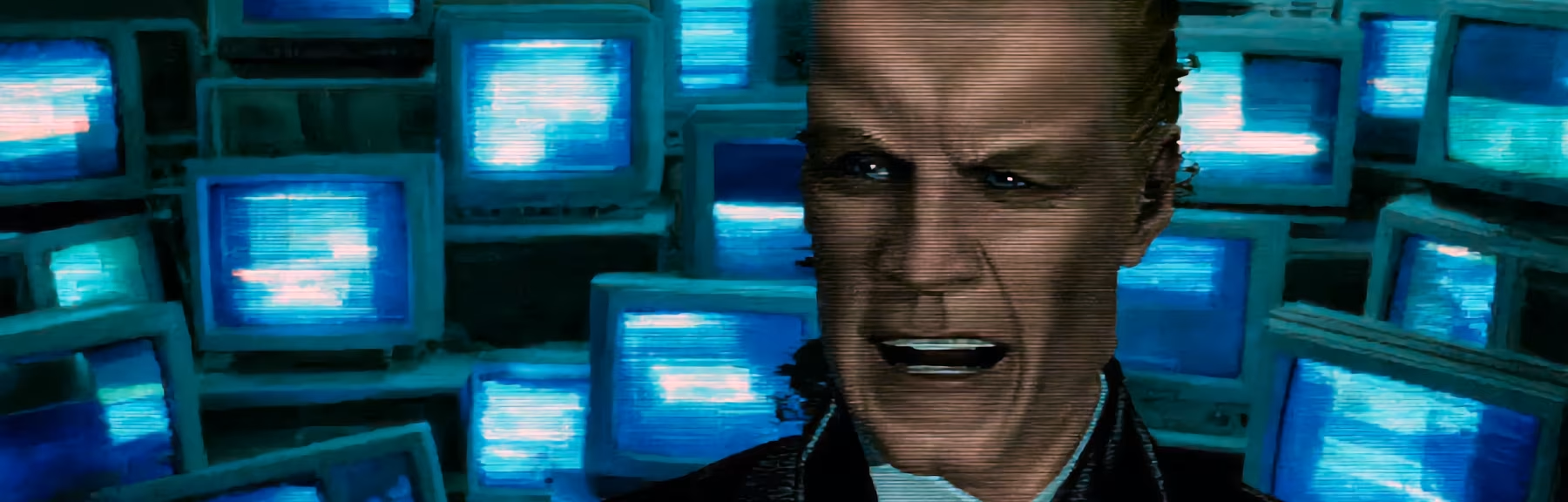
On the evening of 22 November 1987, television viewers in the Chicago area experienced two separate broadcast signal intrusions. The first occurred at approximately 9:14 p.m. during the sports segment of WGN-TV’s Nine O’Clock News. The second took place roughly two hours later on WTTW (Channel 11) during a broadcast of the Doctor Who serial Horror of Fang Rock.
In both cases the legitimate signal was overridden by a video of a person wearing a Max Headroom mask and sunglasses, standing in front of a moving corrugated metal panel designed to imitate the character’s signature background. The first intrusion lasted under thirty seconds and carried only a distorted buzzing sound. The second lasted approximately ninety seconds, included audible (if distorted) speech, and ended with the masked figure being struck with a flyswatter by a second person in a maid’s outfit.
Engineers at WGN were able to regain control by changing the frequency of their studio-to-transmitter link. WTTW’s transmitter, located atop the Sears Tower and unmanned at the time, could not be overridden as quickly. The Federal Communications Commission investigated. No one was ever identified or charged. The case remains open in the practical sense that the perpetrators were never found.
2. Date of Incident
22 November 1987. First intrusion: approximately 9:14 p.m. Central Time on WGN-TV. Second intrusion: approximately 11:15 p.m. on WTTW. The two events were separated by roughly two hours.
3. Location
Chicago, Illinois. The hijacked signals originated from (or were injected toward) the transmitter sites then in use by the two stations: WGN’s link to the John Hancock Center and WTTW’s transmitter atop the Sears Tower (now Willis Tower). The precise physical location of the pirate transmitter has never been established, though engineers assessed that it required significant power and proximity to the receiving antennas.
4. Official Narrative
The FCC treated the events as a serious violation of federal law governing the use of the broadcast spectrum. Statements at the time emphasized the potential penalties (fines and possible imprisonment). Technical analysis indicated that the pirate signal had to overpower the legitimate studio-to-transmitter microwave links. No arrests followed. After the transition to digital television the specific method used became far more difficult to repeat, and the case effectively went cold.
The official position is that the intrusions were the work of unknown individuals with access to specialized transmitting equipment. No motive beyond disruption or spectacle was ever established.
5. Witness Layer
Thousands of ordinary viewers saw the intrusions in real time. The WGN segment was cut short by station engineers; sportscaster Dan Roan returned to air and remarked, in substance, that he had no more idea what had happened than the audience did. The longer WTTW intrusion was captured on home videotape by viewers who happened to be recording Doctor Who. Those consumer recordings remain the primary surviving visual record of the second event, as the station itself was not recording its outgoing signal that night.
Well, if you’re wondering what’s happened, so am I.
Station engineers described the technical requirements in cautious terms. Overpowering a microwave studio-to-transmitter link demanded both knowledge and hardware that were not trivial in 1987. The fact that the same masked figure returned two hours later on a second station suggested planning rather than a single opportunistic act.
6. Content of the Intrusions
The WGN intrusion was brief and silent except for a harsh buzz. The figure rocked and jerked in front of the corrugated backdrop. The WTTW intrusion was longer and more elaborate. Distorted speech referenced WGN, the call letters’ traditional slogan, and sportscaster Chuck Swirsky. The figure held up a Pepsi can while alluding to a Coca-Cola advertising campaign associated with the real Max Headroom character, then discarded it. The sequence concluded with the masked person exposing their buttocks while a second individual in a French-maid costume struck them with a flyswatter. The pirate signal then ceased and normal programming resumed.
7. Assessment
I assess the Max Headroom intrusions as a successful, deliberate, and still-unresolved compromise of two major broadcast signals in a large American media market. The technical bar was real: the pirate transmitter had to deliver a stronger signal at the critical receive points than the stations’ own links. The choice of Max Headroom (a then-current symbol of glitchy, artificial television personality) and the specific references to WGN personnel indicate local knowledge and a degree of media literacy.
One or more individuals with access to microwave transmitting equipment and a prepared video staged the two interruptions as a single operation. The first attempt was partially defeated by rapid engineering response. The second succeeded for the full intended duration because the target transmitter site was not staffed for immediate countermeasures. No credible claim of responsibility has ever surfaced. No suspect has been publicly identified.
The case sits at the intersection of technical capability, theatrical intent, and complete operational security. That combination is rare.
8. Materials & Sensor Data
Primary materials are the surviving off-air videotape recordings of both intrusions (especially the longer WTTW segment) and the contemporaneous engineering accounts from the two stations. No pirate transmitter was ever seized. No forensic trace of the origin point has entered the public record. The FCC investigation file has not produced an identified perpetrator.
9. Key Personnel
Unidentified perpetrator(s) - The individual in the Max Headroom mask and at least one accomplice visible in the second intrusion.
Dan Roan - WGN sportscaster on air during the first intrusion.
WGN and WTTW engineering staff - Responsible for detecting and, in WGN’s case, terminating the pirate signal.
FCC investigators - Conducted the federal inquiry that did not result in charges.
10. Aftermath
The incidents generated immediate local and national news coverage and then settled into the category of unsolved technical curiosities. The digital television transition removed the precise vulnerability that had been exploited. Occasional retrospectives appear on anniversaries. No new evidentiary breakthrough has been made public in the intervening decades. The pattern is one of a high-visibility crime that produced a strong initial response and then permanent silence from the responsible party.
11. Current Archive Status
Status: Active archival. Core unsolved technical intrusion case.
Confidence: High that the two intrusions were the work of the same party or coordinated parties using a prepared video and a capable pirate transmitter. High that the events required non-trivial technical resources. Low confidence on identity, motive beyond disruption, or precise transmission location.
Filing note
Someone overpowered two Chicago television signals on the same night, appeared on thousands of screens in a rubber mask, delivered a short and mostly incoherent performance, and disappeared without ever being identified. The hardware required was not trivial. The operational security was excellent. That combination is why the file is still open.