LEAD MASKS CASE
August 1966. Two Brazilian electronics technicians found dead on a hill near Niterói wearing formal suits, raincoats, and homemade lead eye masks. A cryptic notebook entry scheduled the ingestion of capsules and the use of the masks. Cause of death remains undetermined.
43°06 W
1. Public Record
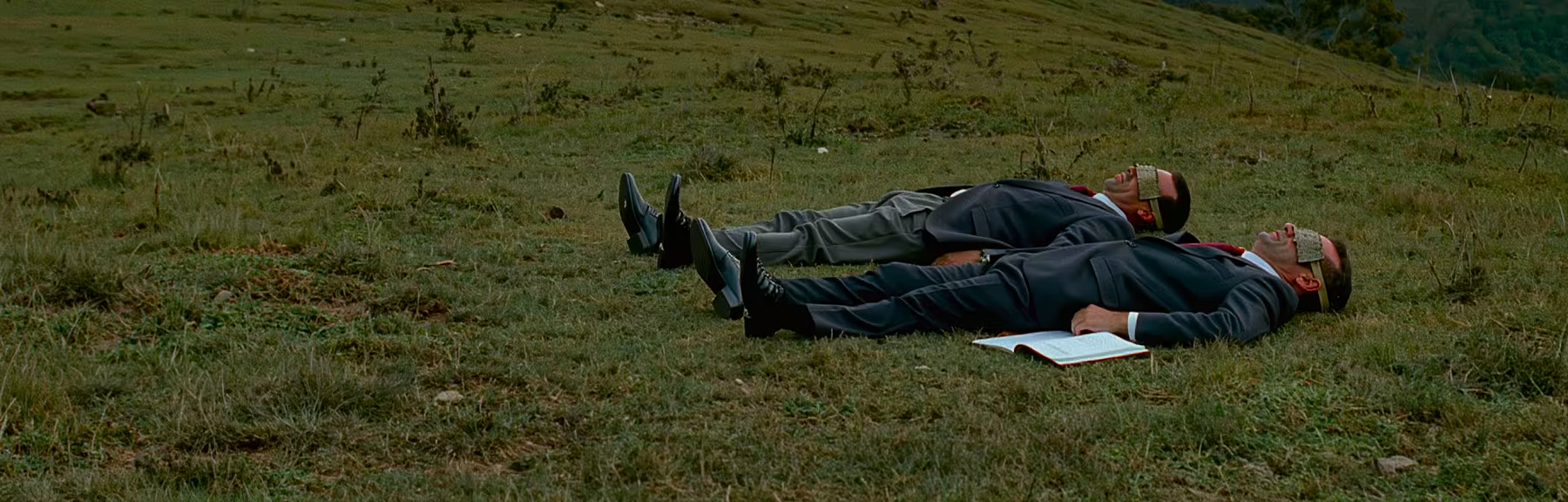
On the afternoon of 20 August 1966 an 18-year-old boy flying a kite on Morro do Vintém (Vintém Hill) in Niterói, Rio de Janeiro state, found two bodies lying in the grass. Police reached the site the following day. The men were dressed in formal suits under waterproof coats. Each wore a crude lead mask cut roughly in the shape of eyewear. Beside them lay an empty water bottle, two towels, and a small notebook.
The notebook contained a short set of instructions written in Portuguese. The most commonly accepted translation reads: “16:30 be at the specified location. 18:30 ingest capsules, after the effect protect metals await signal mask.”
The dead men were identified as Manoel Pereira da Cruz, 32, and Miguel José Viana, 34, both electronics technicians from Campos dos Goytacazes, roughly 270 kilometres away. They had left home on 17 August telling their families they were travelling to buy materials or a used car. They were carrying a significant amount of cash. Most of that money was never recovered.
Autopsy work was delayed by decomposition. No clear cause of death was established. There were no signs of external trauma or struggle. The case was eventually closed without resolution and became known in Brazil as the Mystery of the Lead Masks.
2. Date of Incident
The men left Campos dos Goytacazes on 17 August 1966. They arrived in Niterói that afternoon, purchased raincoats and a bottle of water, and are believed to have climbed Vintém Hill later the same day. The notebook scheduled activity at 16:30 and the ingestion of capsules at 18:30. The bodies were discovered on 20 August and formally recovered on 21 August.
3. Location
Morro do Vintém (Vintém Hill), in the Santa Rosa area of Niterói, across the bay from the city of Rio de Janeiro. Approximate coordinates 22°53 S 43°06 W. A relatively isolated rise with scrub and limited access at the time. The men were found in a small clearing.
4. Official Narrative
Brazilian police reconstructed the men’s movements from bus tickets, shop receipts, and witness statements. They confirmed the lead masks had been made by the men themselves days earlier. The bodies were already in advanced decomposition by the time they were recovered on 21 August. As a result, meaningful toxicology testing was either not completed or returned no usable results. The official autopsy listed the cause of death as undetermined. No external injuries or signs of struggle were found. No arrests were made. The file was eventually archived without resolution.
The official position remains that the deaths are unexplained.
5. Witness Layer
A waitress at a bar near the base of the hill remembered the two men. One of them, believed to be Viana, appeared nervous and repeatedly checked the time. They bought a bottle of mineral water and left on foot in the direction of the hill.
Family members stated the men had left home with a clear cover story about purchasing work materials or a vehicle. Both were married and regarded as ordinary, skilled technicians.
A friend and associate, Élcio Gomes, later told investigators that Cruz and Viana had become involved in what he called “scientific spiritualism.” According to Gomes they had previously attempted to build devices intended to facilitate contact with spirits or higher intelligences. Police searching the men’s workshops found scraps of lead matching the masks, tools used to cut them, and literature containing highlighted passages about intense luminosity and spiritual entities.
“16:30 be at the specified location. 18:30 ingest capsules, after the effect protect metals await signal mask.”
Local residents reported seeing unusual lights or a luminous object over or near Vintém Hill on the evening of 17 August. These accounts were noted but never formally tied to the deaths.
6. The Masks and the Note
The lead masks were simple, handmade cut-outs shaped roughly like eyeless sunglasses. They were designed to cover the eyes and were heavy enough to suggest intentional protection rather than costume. The notebook entry treats the masks as part of a timed sequence: reach the location, take capsules, protect metals, wait for a “mask signal.”
The phrase “protect metals” has never been satisfactorily explained. Given the men’s background in electronics it may refer to shielding equipment, or it may be ritual language. The capsules themselves were never identified. No containers or residue were recovered at the scene. Because of the delayed recovery and the advanced state of decomposition, toxicology could not determine what, if anything, the men had ingested.
7.Assessment
I assess the Lead Masks Case as a planned, deliberate act that ended in the deaths of both participants. The men prepared the masks in advance, travelled a significant distance with a cover story, purchased weather-appropriate clothing, and followed a written schedule that included the ingestion of unknown capsules and the use of the masks.
The most coherent reading of the available material is that Cruz and Viana were attempting some form of contact or altered-state experiment, possibly involving psychedelic or toxic substances, and that they expected an intense luminous phenomenon. The lead masks align with that expectation. The absence of trauma is clear. The absence of usable toxicology is a direct result of the delay in recovering the bodies. That gap leaves both accidental overdose and deliberate self-administration that proved fatal as open possibilities.
I do not rule out third-party involvement, but the evidence for it is thin. The money that disappeared is a loose end. The reports of lights over the hill on the relevant night remain unconfirmed noise. What is solid is the preparation, the note, the masks, and two men who climbed a hill according to a timetable and did not come down alive.
8. Materials & Physical Indicators
Primary items recovered: two homemade lead eye masks, formal clothing, raincoats, an empty water bottle, two towels, a notebook containing the schedule and electronic notations, and a small amount of remaining cash. No apparatus, no obvious drug paraphernalia, and no signs of a struggle were found at the scene. Workshop searches later produced lead scrap and spiritualist literature with marked passages concerning intense light.
Toxicology was effectively unavailable. The bodies had been exposed for several days in warm conditions before recovery. Later claims of barbiturates or other substances appear in some secondary accounts but are not supported by a completed, reliable toxicological report in the primary record.
9. Key Personnel
Manoel Pereira da Cruz (32) - Electronics technician, married, one of the two deceased.
Miguel José Viana (34) - Electronics technician, married, one of the two deceased. Handwriting on the critical notebook page has been attributed to him in some accounts.
Élcio Gomes - Associate who described the men’s interest in scientific spiritualism and prior experimental activity.
Jorge da Costa Alves - The teenager who discovered the bodies while flying a kite.
Local police and medical examiners - Conducted the delayed recovery and the inconclusive post-mortem work.
10. Aftermath
The case attracted heavy local press coverage and then faded. No sustained federal-level inquiry appears to have been mounted. The incomplete toxicology and the loss of potential evidence through decomposition effectively closed the forensic door. Later retellings have layered UFO and occult interpretations onto the thin official record. The core facts have remained stable for nearly sixty years: two prepared men, a timed note, lead masks, and no determined cause of death.
11. Current Archive Status
Status: Active archival. Core high-strangeness death case.
Confidence: High that the deaths were the result of a deliberate, pre-planned activity involving the capsules and the masks. Moderate confidence that the intent was some form of contact or visionary experiment. Low confidence on the exact nature of the capsules or whether any external phenomenon occurred on the hill that night.
Filing note
Two electronics technicians cut lead masks, wrote themselves a schedule, climbed a hill at the appointed time, and were found days later with the masks still in place. The note is still the clearest document in the file. The missing toxicology is a permanent gap created by the delay in recovery. Everything else is inference. That is enough to keep the case open.