WOLF MEMORIAL
Emilcin, 10 May 1978. Jan Wolski, farmer born 1907, on a horse cart, says two short green-faced beings take him into a white craft the size of a bus. Dies 8 January 1990. Memorial stone 2005. Craft untyped.
022°02'00 E
1. Public Record
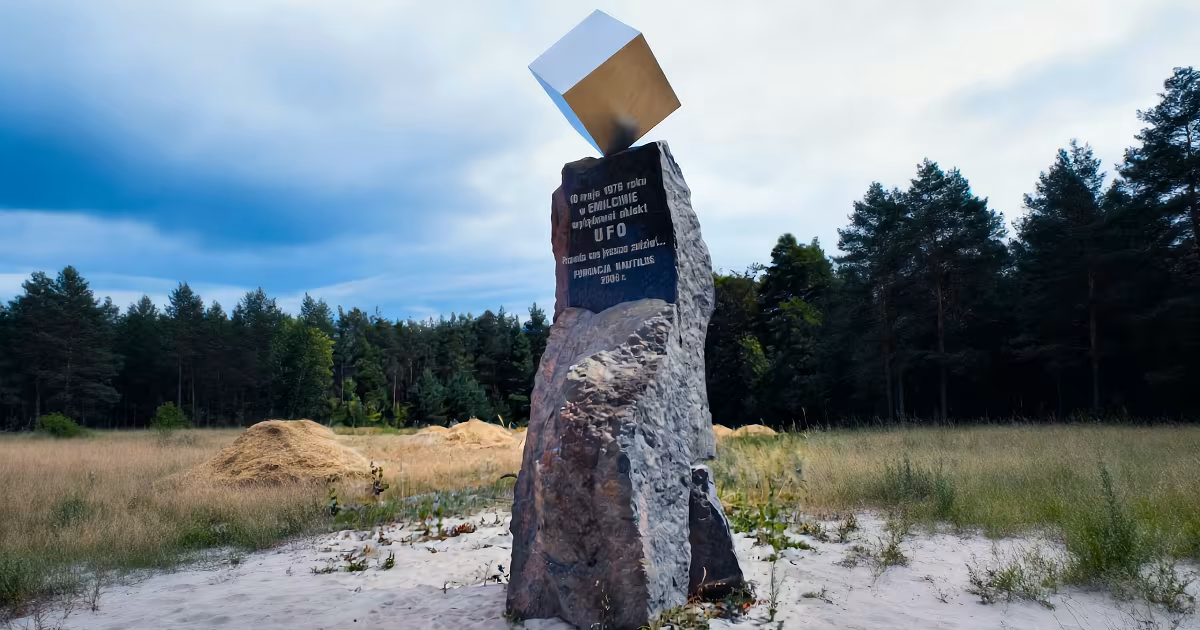
Emilcin, Lublin voivodeship, 10 May 1978. Jan Wolski, a farmer born 1907, on a horse cart, says two short green-faced beings stop him, take him to a white craft the size of a bus hanging above the ground, and put him through a room that sounds like every later abduction minus the American television. He goes home. He talks. Poland in 1978 does not make him famous. He dies 8 January 1990. In 2005 a memorial goes up on the site. The inscription in Polish: on 10 May 1978 in Emilcin a UFO object landed. The truth will astonish us in the future.
This is the Wolf Memorial. Not a Michigan park. A Polish stone that a village allowed. The horse is the detail the later pages skip. A farmer who still had a cart in 1978 is the man, not a contactee with a mailing list. Green faces are the part that will not sit in a lab. The cart is the part that will.
A cart. A white bus in the air. A stone that arrived twenty-seven years late.
On 10 May 1978 in Emilcin a UFO object landed. The truth will astonish us in the future.
The first sentence is a claim. The second is a hope. A village that allows both on a stone is doing local memory, not a ministry finding. Keep the hope in the inscription. Do not file it as a type.
2. Date of Incident
10 May 1978. Wolski dies 8 January 1990. Memorial 2005.
3. Location
Emilcin, Poland. Approximate 51°08 N 022°02 E.
4. Official Narrative
No Polish state recovery. Official narrative is absence. The memorial is local, not ministerial.
5. Witness Layer
Jan Wolski. Family and neighbours as later remembered. Memorial organisers in 2005. Later Polish compilers.
Two short green-faced beings stop him on a horse cart.
Green is the expensive colour. A cart on a dirt road in 1978 is the cheap, solid one. Start with the cheap fact. Let the colour earn every sentence after.
A farmer who still had a cart in 1978 is the man, not a contactee with a mailing list.
No lecture circuit. No American television grammar in the first telling. Silence around him is part of the case. It does not prove he invented it and it does not prove he did not.
6. Recovery Logistics
Testimony. A stone in 2005. No object.
7. Assessment
A single farmer and a late stone. That is the whole public file. Green faces are the part that will not sit in a lab. A cart on a dirt road is the part that will. 1978 Poland is not 1975 Arizona. The silence around him is part of the case, not proof either way.
This folder files Emilcin as a one-witness landing with a village memorial. Keep the horse. Keep the inscription's second sentence as a hope, not a finding. Do not weld it to Varginha because both have a monument.
8. Materials & Remains
Wolski's account. 2005 memorial. No hardware.
9. Key Personnel
Jan Wolski : The cart. 1907-1990.
2005 memorial organisers : The stone.
10. Aftermath
Emilcin keeps a marker. Polish ufology keeps a date. The future the stone promised has not published a type. The horse still does not appear in most photographs of the stone.
11. Current Archive Status
Status: 10 May 1978. Cart. Stone 2005.
Confidence: High that Wolski told a landing story and that a memorial stands. Low that the craft is typed. Low that the inscription is a finding.
Filing note
A Lublin farmer born 1907, a horse cart on 10 May, two short figures, a white thing the size of a bus, twenty-seven years, a stone that says the truth will astonish us later.
He still had a cart. That is the 1978 sentence the memorial cannot improve.