GREEN FIREBALLS
Southwest US, late 1948-49. Green meteors too slow, too level, too silent. Los Alamos and Sandia under some paths. Lincoln LaPaz walks arroyos and finds no usual stone. Project Twinkle catches no type.
106°18'00 W
1. Public Record
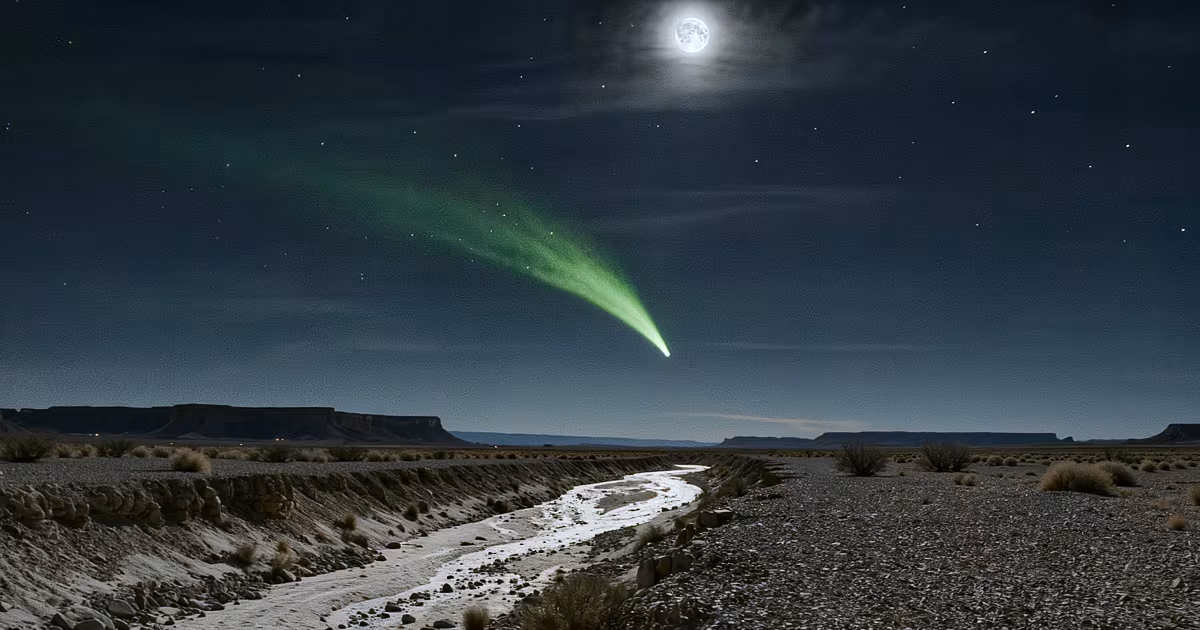
Green fireballs over the American Southwest, late 1948 into 1949 and after. Pilots, civilians, and atomic-site staff report green meteors that do not behave. They fall too slow, too level, too green, and sometimes too silent. Los Alamos and Sandia sit under some of the paths. Dr Lincoln LaPaz of the University of New Mexico, the man the Army already trusts with meteor recovery, is asked to look. He walks arroyos for fragments and does not find the usual stone. He tells officers these are not ordinary fireballs.
Project Twinkle is the official attempt to catch one on film and theodolite. It produces little that a later folder will call a type. The Air Force oscillates between meteor, flare, and classified gadget. LaPaz stays unhappy. The green stays in the statements. No public basket of fragments ever closes him.
Atomic country. A green that would not act like stone. A professor in an arroyo with empty hands.
He walks arroyos for fragments and does not find the usual stone.
2. Date of Incident
Principal cluster late 1948 through 1949. Twinkle into the early 1950s. Scattered later green reports.
3. Location
New Mexico and neighbouring Southwest, including skies over Los Alamos and Sandia. Approximate 35°53 N 106°18 W for the Los Alamos weight.
4. Official Narrative
Meteors and possible flares in the official mix. Twinkle does not deliver a specimen. Official narrative never adopts LaPaz's unease as doctrine.
5. Witness Layer
Airline and military pilots. Atomic-site personnel. LaPaz. Twinkle camera teams.
Too slow, too level, too green, and sometimes too silent.
Project Twinkle produces little that a later folder will call a type.
6. Recovery Logistics
No public meteorite tray tagged to the green cluster. Twinkle film as a thin take.
7. Assessment
LaPaz is the reason this page is not a colour rumour. A meteor man who cannot find stone is more interesting than a civilian who saw green. Atomic skies make everyone jump. They also make the Air Force send a professor instead of a press officer. Twinkle's empty catch is part of the record. So is the refusal to say gadget in public.
This folder files the fireballs as a Southwest problem that official paper never typed. Green is allowed to be chemistry. Level flight is the part chemistry has to work for. Empty arroyos are the part this page will not talk away.
8. Materials & Remains
Witness paper. LaPaz notes. Twinkle scraps. No public fragments.
9. Key Personnel
Lincoln LaPaz : The meteor man with empty hands.
Project Twinkle : The official net.
10. Aftermath
Green fireballs become a slide in every 1949 briefing. Twinkle dies quietly. Los Alamos keeps working. The arroyos keep their silence.
11. Current Archive Status
Status: 1948-49. Green, level. LaPaz empty. Twinkle thin.
Confidence: High that a green-fireball cluster sat over the Southwest and that LaPaz treated it as abnormal. Low that Twinkle typed it. Low that a gadget close is documented.
Filing note
Atomic country at the end of the forties, pilots calling green, a meteor professor walking dry ground for stone that was not there, a project named like a toy that did not catch a type.
He did not find the usual stone. That is the most expensive sentence a meteor man can write.