FALCON LAKE
20 May 1967. Stefan Michalak, prospector, approaches a landed craft near Falcon Lake, Manitoba. Hot gas burns his chest. Shirt extant. RCMP and RCAF paper. No hull recovered.
095°19'00 W
1. Public Record
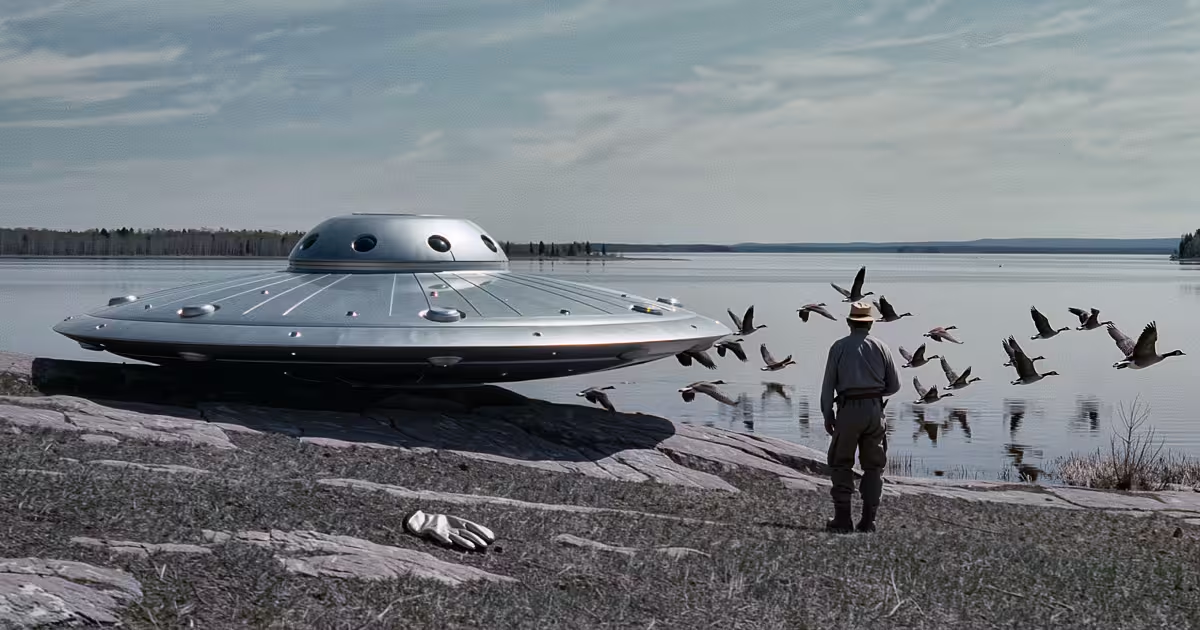
20 May 1967, midday. Stefan Michalak, fifty-one, amateur prospector, was on quartz near Falcon Lake on the Manitoba-Ontario line. Geese went up. Two red cigar-shaped objects came down. One left. The other landed on a rock. He walked to it. He called out in English and then in other languages he knew. Nothing answered.
He put a glove on the hull. The fingertips melted. A hatch closed. A grid of holes on the side blew hot gas into his chest. Shirt and undershirt caught. He tore them off. The craft lifted. He stumbled out to the road, asked an RCMP officer for help, was not taken seriously, reached a motel, then Winnipeg, then Misericordia Hospital. Burns. Nausea. Weight loss. RCMP, RCAF, Health, Defence, and later the Condon Committee all opened paper.
I was burned from the heat, and I was thrown back. My clothes, shirt and chest were burned.
2. Date of Incident
20 May 1967, about 12:15. Hospital the same night. Grid-pattern photographs of the abdomen belong to January 1968, when he said the burns had returned. Keep those dates apart.
3. Location
Precambrian rock near Falcon Lake, Manitoba. Approximate 49°41 N 095°19 W. Motel at the lake. Hospital in Winnipeg.
4. Official Narrative
Canadian agencies logged burns, a shirt, soil, and some low radioactivity talk that never became a finding of a craft. RCMP officers who saw him early compared the chest to a severe localised sunburn. Condon took the file and did not close it as a hoax that satisfied everyone. Official posture: injured man, disputed cause, no recovered craft.
5. Witness Layer
Michalak is the landing witness. Constables saw the burns and the smell he compared to burnt electrical insulation. His son took him to hospital. Later grid photos are the image everyone reprints and the weakest contemporaneous piece. The 1967 medical notes describe blotchy, irregular marks, not a tidy lattice. Say so.
It resembled an exceptionally severe sunburn in the one spot.
6. Recovery Logistics
Burned outer shirt and undershirt. Melted glove fingertips. Soil and slag from a later return to the rock. The shirt is now in University of Manitoba Archives.
7. Assessment
Canada’s best-documented burn case and still not a recovered craft. The May injuries and the January grid are two layers. Sceptics stop at the barbecue and the later photograph. The file that remains is a prospector who walked out of the bush with a burned chest and a shirt that smelled of electrical fire. That is enough to keep without promoting the 1968 picture to 1967.
8. Materials & Remains
Shirt. Glove. RCMP and health paper. Site rock that tourists now stand on.
9. Key Personnel
Stefan Michalak : Prospector. The burns.
RCMP / RCAF / DND : Canadian paper.
Condon Committee : U.S. look.
10. Aftermath
He never recanted. His son wrote a book. The rock is on a trail. The shirt is in an archive box, which is the correct place for it.
11. Current Archive Status
Status: Documented burn case, Falcon Lake, 20 May 1967. Shirt extant.
Confidence: High that Michalak presented with chest burns the same day and that Canadian agencies opened files. Moderate that the May marks match the vent story. Low that the January 1968 grid photograph should be filed as the original injury. Low that a craft fragment exists outside the shirt box.
Filing note
A prospector on quartz, geese going up, a hull he said he touched, a blast that set a shirt on fire, a hospital the same night. The tidy grid everyone shares arrived eight months later. Keep the months apart.
He called out in more than one language and nobody answered. English, then Russian, then the others he had. A man standing on a rock trying the words he owned. That small courtesy makes the melted glove colder.