ALLAGASH
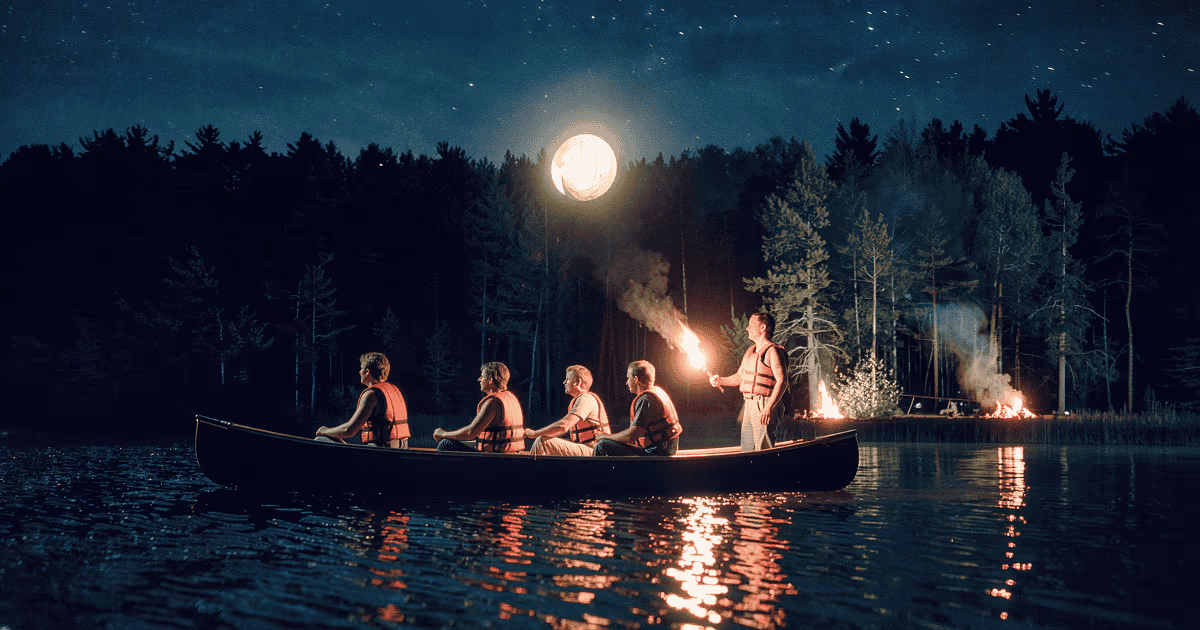
20-21 August 1976. Four canoeists on Eagle Lake, Maine. A light, a torch, a fire burned down too far. Later session layer kept separate.
069°03'00 W
1. Public Record
August 1976. Four men in their early twenties, all connected to the Massachusetts College of Art, left Boston on the 20th for a canoe trip on the Allagash Wilderness Waterway. Twins Jack and Jim Weiner, Charlie Foltz, and Chuck Rak. A float plane put them and the canoes onto Telos Lake. They worked north for days. On a night commonly given as 20-21 August in the popular file and as the 26th in some later reconstructions, they camped on Eagle Lake near Smith Brook and went out after trout. The night was dark enough that they built a large fire on the bank as a beacon, laying logs they believed would last two or three hours.
On the water Chuck Rak felt watched. A bright sphere stood off the south-eastern trees, two or three hundred feet up, silent. Foltz raised a torch and signalled. The sphere stopped its motion and came toward the canoe. A hollow beam hit the water, a ring with a dark centre. They paddled for the fire. The next clear memory, shared in outline by all four, is standing on the bank with the sphere fading and the fire burned down to coals. Subjective time on the water was fifteen or twenty minutes. The fire said hours.
Years later, after Jim Weiner began having dreams and headaches, the four sat separately with an investigator and, under regression, described being taken aboard and examined. Chuck Rak later disputed how large the logs had been. The contemporaneous layer is thinner than the 1990s book: a light, a torch, a fire that had died, a shared unease. Both layers are kept. They are not the same paper.
When we left to go fishing we set very large logs on the fire to burn for a good two to three hours. The entire experience seemed to last, at most, fifteen or twenty minutes. Yet the fire was completely burned down to red coals.
2. Date of Incident
Left Boston 20 August 1976. Eagle Lake night fishing later that week. Public account years after. Regression material from 1988 onward.
3. Location
Eagle Lake, Allagash Wilderness Waterway, Maine. Approximate 47°05 N 069°03 W.
4. Official Narrative
No official recovery. Official narrative, such as it is, is four campers and a light. The abduction narrative is later and private.
5. Witness Layer
Four men, same canoe trip, same lake. The torch signal and the dead fire are the shared waking details. The examination rooms are the shared later details. Treat them as two strata. Rak's later dissent on the size of the logs belongs on the page. It does not erase the other three.
I hit it with the light and it came closer.
6. Recovery Logistics
No craft. No state evidence bag. Later drawings and session tapes only.
7. Assessment
A four-witness wilderness file with a thin night and a thick later story. The value is that four men, not one, came off the same lake with the same gap. Keep the dead fire. That is the part that does not need a session to exist. Keep the date problem visible. The popular file and some reconstructions do not agree on which night of the trip the canoe went out.
8. Materials & Remains
Later interviews. Session notes. Raymond Fowler's book. No recovered object.
9. Key Personnel
Jack Weiner : Twin. Camper.
Jim Weiner : Twin. Camper. Dreams that reopened the night.
Charlie Foltz : The torch.
Chuck Rak : Fourth canoe. Later dissent on the logs.
10. Aftermath
The Allagash names entered the abduction lists of the 1990s. The lake stayed a canoe route. One of the four stepped back from the fullest version of the story. The other three did not.
11. Current Archive Status
Status: Four campers, Eagle Lake, August 1976. Shared gap. Later session material.
Confidence: High that four men were on Eagle Lake that week and reported a light and a shortened fire. Moderate that all four later described the same gap. Low that a craft was recovered. Low that regression is a substitute for a contemporaneous medical file.
Filing note
Four art students, a night lake, a sphere off the trees, a torch, a fire that had burned down too far, a gap they only named years later. The waterway kept taking paddlers.
The fire was gone. Not an examination table. A campfire that had no right to be ash when they walked back.