VAL JOHNSON
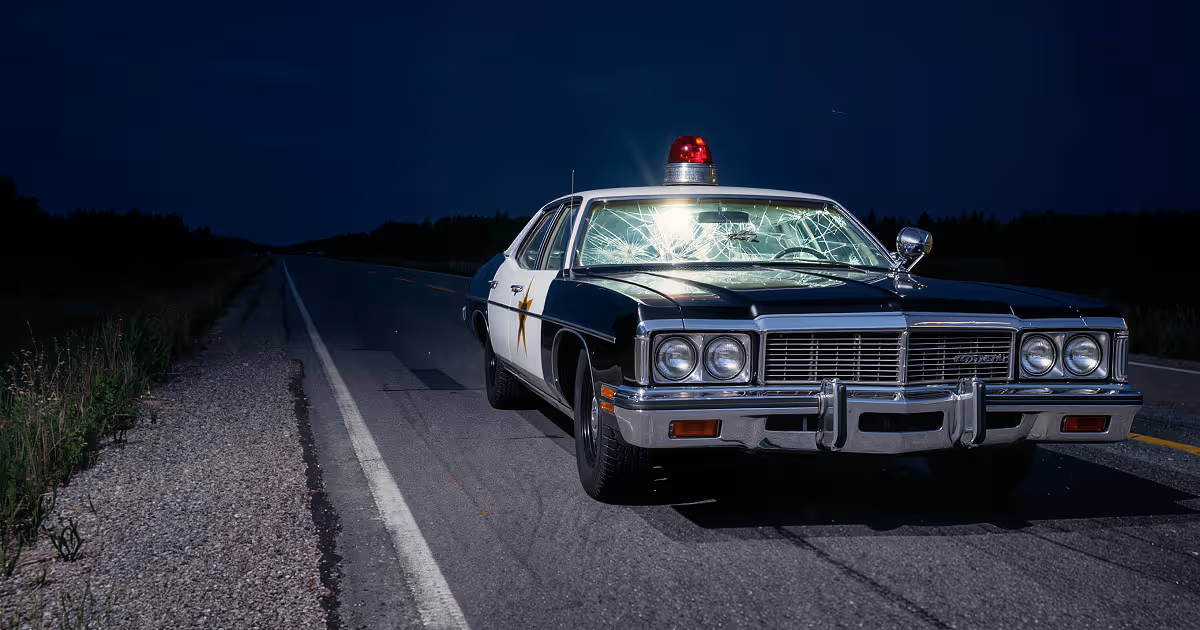
Marshall County, Minnesota, 27 August 1979. Deputy Val Johnson drives at a light. Windshield gone, eyes burned, squad clock and wristwatch both fourteen minutes behind.
096°11'00 W
1. Public Record
Marshall County, Minnesota, 27 August 1979. Deputy Val Johnson is on the road after midnight in a patrol car that has been ordinary all shift. A light sits over the highway. He moves toward it because that is the job. The light moves toward him because it does not care about the job. The windshield goes. So does a headlight. His eyes take a burn. When he can talk again, the squad clock and his wristwatch are both fourteen minutes behind a world that did not wait for him.
Other deputies find him off the road. The car is a wreck in the small ways that matter: glass, alignment, a man who cannot see the way he could an hour ago. There is no second vehicle to hang the damage on. The county has to file a patrol car that lost an argument with a light.
Minnesota in August is already late-summer dark and long miles. Johnson is not a tourist. He is the person the county sends when something is on the asphalt. That is why the damaged Ford is heavier than a story told from a kitchen.
It was like the car hit something. Then I was sitting there and I couldn't see.
He does not start with a craft. He starts with impact and blindness. Those are patrol words. They are also the words a man uses when he is still trying to stay inside the report form.
2. Date of Incident
27 August 1979, after midnight, Marshall County roads near Stephen / Warren, Minnesota.
3. Location
Marshall County, Minnesota. Approximate 48°27 N 096°11 W.
4. Official Narrative
Sheriff's office documents the car and Johnson's eyes. No second driver. Official-adjacent later talk offers fatigue, animal, and a deputy who drifted. Fourteen minutes on two clocks is the part those closes have to buy.
5. Witness Layer
Val Johnson. Deputies who found the car. Sheriff's office. Later Minnesota compilers.
Both watches were wrong by the same fourteen minutes.
One clock can be broken. Two clocks in agreement after a wreck is either theatre or an hour the road did not keep. Theatre usually needs an audience. Johnson had a ditch.
He wears the eye trouble in public long enough that local paper has to treat it as medical weather, not as a punchline. That does not prove a craft. It proves the county had a deputy who could not pretend the shift had been normal.
6. Recovery Logistics
Damaged patrol car. Medical attention to the eyes. No object on the asphalt.
7. Assessment
Start with glass and time. A light that only frightened a man would have left a story. This light left a windshield, a headlamp, and two clocks. Fatigue can put a car in a ditch. Fatigue does not usually punch a windscreen from the front and then negotiate with a wristwatch. If this is ordinary, ordinary has become expensive.
Johnson keeps being a deputy after. That is either stubbornness or a man who still had to work the same roads. The file is not his later fame. The file is the Ford that could not be driven home like a rumour.
8. Materials & Remains
Patrol car damage record. Eye injury record. Time discrepancy as logged. No metal from the light.
9. Key Personnel
Val Johnson : The shift.
Marshall County deputies : The ditch.
10. Aftermath
The car is photographed and talked about. Johnson's eyes become the local sentence. The road stays a road. Fourteen minutes never come back.
11. Current Archive Status
Status: Glass. Eyes. Fourteen minutes.
Confidence: High that Johnson's patrol car was damaged in the early hours of 27 August 1979 and that he reported a light and lost time on two clocks. Low that the light is typed. The windshield is the object that will not talk.
Filing note
A Minnesota county road after midnight, a deputy doing the mileage, a light that did not yield, a Ford that came off the asphalt with its glass gone.
The wristwatch and the dash clock agreed they had missed the same fourteen minutes. Clocks do not usually conspire unless the hour did.