DECHMONT LAW
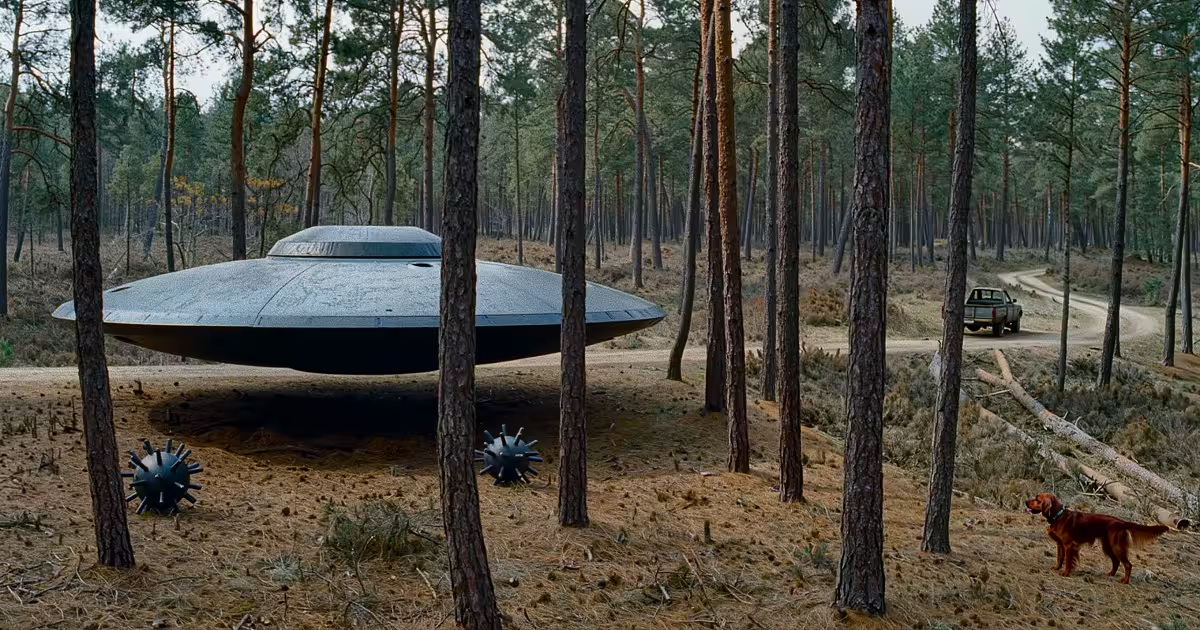
9 November 1979. Forestry worker Robert Taylor walks into a clearing on Dechmont Law with his dog. Dome, two spiked spheres, torn serge trousers, ladder-like ground marks. Police log it as assault.
003°35'00 W
1. Public Record
9 November 1979, mid-morning. Robert Taylor, sixty-one, forestry worker for the Livingston Development Corporation, parked his pickup at the foot of Dechmont Law and walked up with his red setter, Lara. In a clearing he found a dark dome, rough like sandpaper, a rim of small propellers. Two smaller spheres, spiked like sea mines, came at him with a plopping sound, hooked his trouser legs, and pulled. Smell like burning brake linings. He went down.
He came to muddy, trousers torn, unable at first to speak sense. Mary Taylor called the doctor and the police. Officers walked the clearing and found ladder-like marks and a track that matched the smaller spheres. They logged it as assault because they had torn clothes and no other box to put it in. The case stayed open.
I am a countryman and I have never seen anything like this before. I was mesmerised by that thing that was sitting about 12ft away from me.
2. Date of Incident
9 November 1979, about 10:30. Police the same day. Forensic look at the navy serge trousers. Taylor died in 2007 without recanting.
3. Location
Dechmont Law, Livingston, West Lothian, near the M8. Approximate 55°54 N 003°35 W. Clearing on a forestry path. There is now a marked trail to the spot.
4. Official Narrative
Lothian and Borders Police: common assault. No suspect. PC William Douglas wrote that there appeared to be no rational explanation for the ground marks. Official narrative is an injured forestry worker, torn work trousers, and a clearing that did not help.
5. Witness Layer
Taylor and the dog. Mary at the door. Police and a doctor for the grazes on chin and thighs. The trousers were police-issue blue serge. Forensics said the tears looked hooked and drawn upward, not like a crawl through gorse. That sentence is why the file is not only a faint in the woods.
There appeared to be no rational explanation for these marks.
I do not think they were out to do me any harm, but I was very frightened.
6. Recovery Logistics
Trousers and long underpants taken by police. Ground casts or at least measurements of the ladder marks. The trousers later passed into private ufological hands. No dome.
7. Assessment
The only British close-encounter file that sits inside a crime book as well as a UFO book. That double filing is the point. A 61-year-old forester is not a contactee circuit. The smell of burning brakes is the sort of domestic comparison a man like that reaches for. Keep the assault classification. It is what the police could actually write.
8. Materials & Remains
Torn serge trousers. Ground marks, now a trail. Police statements.
9. Key Personnel
Robert Taylor : Forester. The trousers.
Mary Taylor : Called the police.
PC William Douglas : Ground marks.
Lara : The red setter. Present, not a speaker.
10. Aftermath
Livingston put a path in. Taylor kept the same story until he died. The open assault file is more interesting than the trail signs.
11. Current Archive Status
Status: Police-logged assault, Dechmont Law, 9 November 1979. Torn trousers. Ground marks. No suspect.
Confidence: High that Taylor came home injured with torn serge and that police recorded unexplained marks in the clearing. High that he did not recant. Low that a craft was recovered. Low that the assault box will ever hold a name.
Filing note
A forester and a dog, a clearing, a smell like burning brakes, trousers hooked upward, police who had no other heading to use. He was sixty-one. He was not on a circuit.
The dog’s name was Lara. A red setter on a Friday morning walk. That small ordinary companion makes the plopping spheres colder than any later trail leaflet.