BATTLE OF LOS ANGELES
25 February 1942. Los Angeles batteries fire more than 1,400 shells at an unidentified sky. No bombs. No wreck. Knox says nerves. Marshall lists aircraft.
118°15'00 W
1. Public Record
Night of 24-25 February 1942. Los Angeles, three months after Pearl Harbor, one day after a Japanese submarine shelled Ellwood. Radar west of the city painted a target. Sirens. Blackout. At about 03:16 the 37th Coast Artillery Brigade opened with 12.8-pound shells and .50-caliber. Searchlights found something, or found each other. More than 1,400 rounds went up. Nothing came down that the Army would call an aircraft. No bombs fell. Five civilians died of panic and traffic and heart, not of enemy fire. All-clear at 07:21.
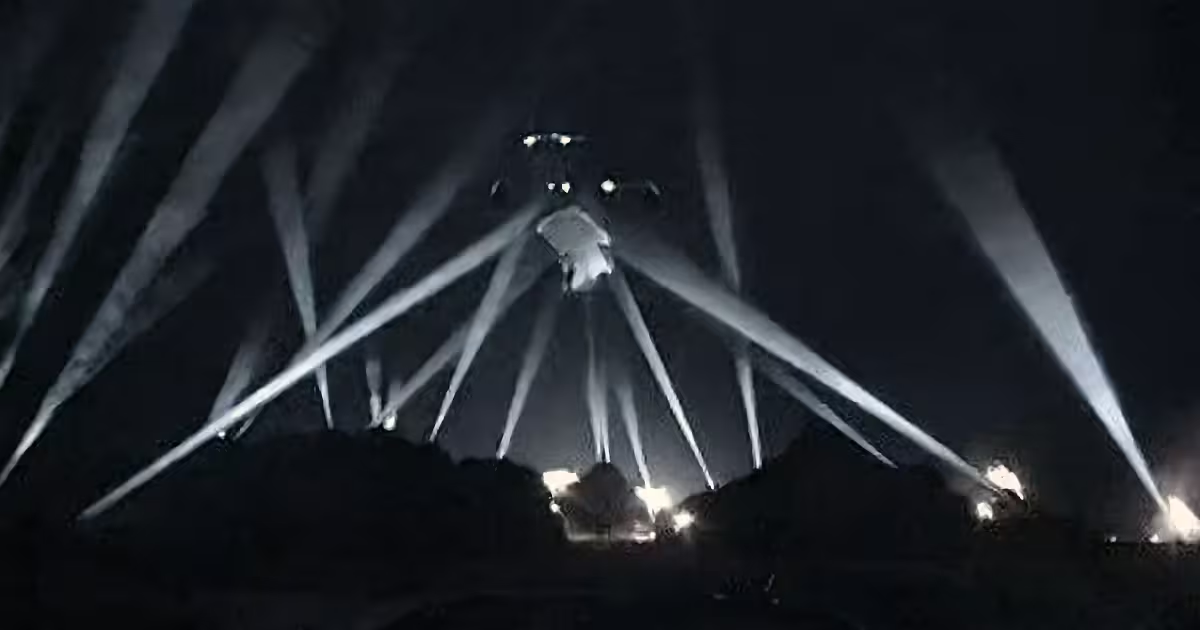
Secretary of the Navy Frank Knox called it war nerves the same morning. Secretary of War Stimson would not. Army paper the next day listed 15 to 20 unidentified aircraft, no U.S. planes in the air, no shoot-downs. The photograph of beams crossing over a black shape is the image the file cannot put down.
The air over Los Angeles erupted like a volcano.
2. Date of Incident
25 February 1942, roughly 03:16 to 04:14 for the main fire. Blackout lifted 07:21. Marshall’s memo to the President 26 February.
3. Location
Los Angeles basin, Santa Monica to Long Beach. Approximate 34°03 N 118°15 W. Batteries of the 37th Coast Artillery. Radar first pick 120 miles west.
4. Official Narrative
Two official sentences that do not agree. Knox: false alarm. Stimson and Marshall: unidentified aircraft, not U.S., not shot down, no bombs. Later weather-balloon readings sit beside those two. Official narrative is a city that fired 1,400 shells at a sky that did not fire back.
5. Witness Layer
Gunners, wardens, a city under blackout. Reports of one object and of hundreds. Shell bursts in the beams were mistaken for planes, which is written in the official history and is also how a real object would have looked after the third volley. Five dead on the ground are not folklore.
These mysterious forces dropped no bombs and, despite the fact that 1,440 rounds of anti-aircraft ammunition were directed against them, suffered no losses.
Probably much of the confusion came from the fact that anti-aircraft shell bursts, caught by the searchlights, were themselves mistaken for enemy planes.
6. Recovery Logistics
Unexploded shells and fragments in streets and yards. No airframe. No Japanese claim of a raid on Los Angeles that night. I-17’s Ellwood shelling is the day before and a different file.
7. Assessment
A wartime false-alarm file that will not sit still as only nerves. The Army fired. The Navy shrugged. Marshall listed aircraft that were not there on any ramp. A meteorological balloon from the gunners’ own side is a live reading for the first light. It does not have to carry 1,400 rounds by itself. Keep both official sentences. They are the file.
8. Materials & Remains
Marshall memo. Knox press line. The searchlight photograph. Shell fragments. Five death certificates that are not combat deaths.
9. Key Personnel
37th Coast Artillery Brigade : The guns.
Frank Knox : War nerves.
Henry Stimson / George Marshall : Unidentified aircraft.
4th Interceptor Command : Alerted. Not airborne.
10. Aftermath
The photograph outlived the memo. Executive Order 9066 already existed. The raid that was not a raid did not slow it. Later saucer books put a craft in the beams. The Army paper does not.
11. Current Archive Status
Status: Anti-aircraft barrage, Los Angeles, 25 February 1942. 1,400-plus rounds. No recovered aircraft. Official statements split.
Confidence: High that the batteries fired and that no enemy bomb fell. High that five civilians died in the panic. Low that a Japanese raid took place. Low that the searchlight photograph is a craft rather than smoke and burst.
Filing note
Radar, sirens, 1,400 shells, no bomb, five dead on the ground from traffic and hearts. Knox said nerves. Marshall listed aircraft that never landed. The interceptors stayed on the ramp.
The gunners put up their own weather balloon earlier in the night. A tool they needed for the guns, hanging in the same beams they then fired into. That small professional object makes the volcano of shells colder than any later craft drawn into the photograph.