KRYPTOS
3 November 1990. CIA courtyard, Langley. Sanborn and Scheidt cut four copper plates, about 1,800 characters. K1-K3 open in the 1990s. K4 ninety-seven unread. BERLIN, CLOCK, NORTHEAST, EAST. No public plaintext.
077°09'00 W
1. Public Record
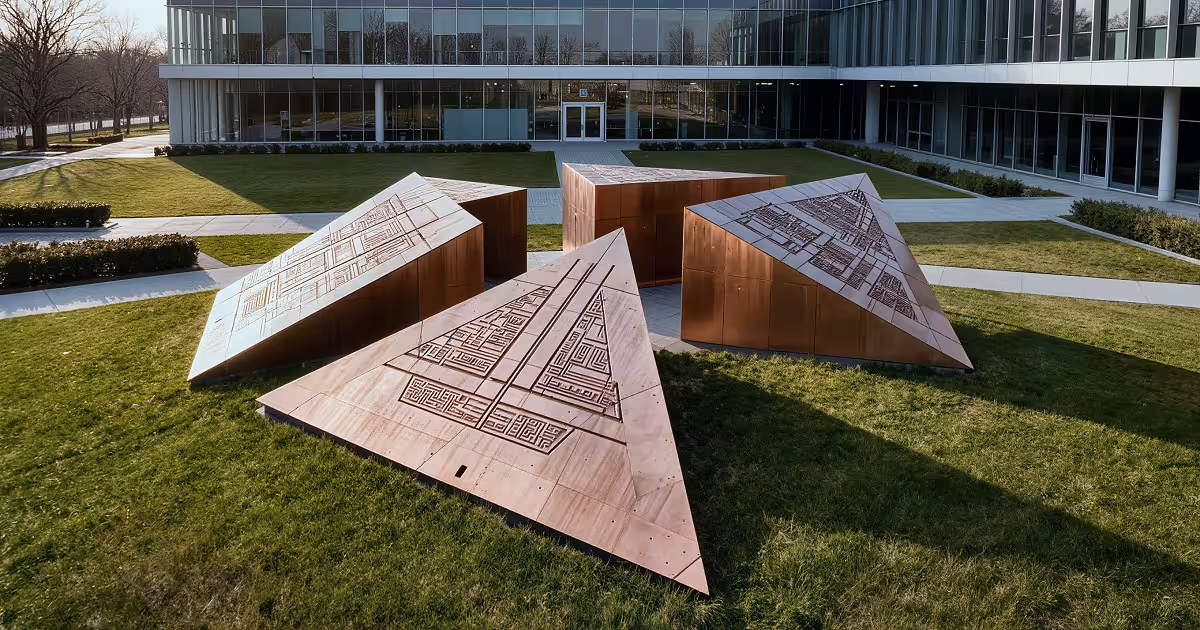
CIA courtyard, Langley. Kryptos, dedicated 3 November 1990. Jim Sanborn cuts four copper plates with a script he built with Edward Scheidt, former chairman of the CIA's Cryptographic Center. About 1,800 characters in all. Four passages. K1, K2 and K3 fall to Agency and NSA readers in the 1990s. K1 is a Vigenère. K3 is a transposition that yields a paraphrase of Howard Carter opening a tomb. K2, once fully punctuated, includes a latitude and longitude that point near the courtyard itself and later absorbs the word BERLIN as a published clue.
K4 is ninety-seven characters. It has not been read in public. Sanborn releases crumbs over the years: BERLIN in 2010, CLOCK in 2014, then NORTHEAST and EAST. He has said the first three were meant to be solved. He has not said the fourth was meant to be easy. A buried sheet of other material and a compass rose sit with the sculpture as part of the work. In later years he talks of auctioning the solution against his own death, then returns to further clues. The courtyard staff walk past it every working day.
Three doors open. One still shut. The Agency lives with a problem it commissioned and cannot assign to a section.
2. Date of Incident
Dedicated 3 November 1990. K1-K3 broken through the 1990s. K4 clues across later years.
3. Location
CIA Headquarters courtyard, Langley, Virginia. Approximate 38°57 N 077°09 W.
4. Official Narrative
The Agency paid for an artwork that still holds a secret on purpose. Official narrative is not a disclosure dump. K4 is not a classified cable. It is a sculptor's remaining lock.
5. Witness Layer
Sanborn. Scheidt. CIA and NSA readers of the first three. The K4 community as a standing committee with no charter.
BERLIN. CLOCK. NORTHEAST. EAST.
6. Recovery Logistics
No crate under the lawn that finished K4. Clues only. The buried sheet is part of the piece, not a second plain text.
7. Assessment
A courtyard file. Keep the four panels and the ninety-seven. Keep Scheidt so the code is not only art-school. Keep Sanborn alive in the file as a man who can still speak. Do not write Kryptos as a craft. Do not write the solved three as proof the fourth is ordinary. Carter's tomb paraphrase in K3 is the joke already hiding in the copper.
8. Materials & Remains
The sculpture. Four texts. Published clues. Scheidt's method notes as far as released.
9. Key Personnel
Jim Sanborn : The cut copper.
Edward Scheidt : The codes.
Early Agency and NSA solvers : K1-K3.
10. Aftermath
K4 outlives careers. The courtyard still has a problem the building cannot close. Auction talk did not produce a public plaintext.
11. Current Archive Status
Status: Dedicated 1990. K1-K3 open. K4 ninety-seven shut.
Confidence: High that three passages are read and that ninety-seven characters are not. Low that any released word is the whole of K4. Low that the buried sheet is a second readable page.
Filing note
A sculptor, a retired Agency coder, four copper faces in a courtyard where people carry badges, three passages that fell in a decade, ninety-seven characters that have not, crumbs dripped like feed, a tomb joke sitting already in K3.
Meant to be solved. He said that about the first three. He did not say it about the last.