HOPE DIAMOND
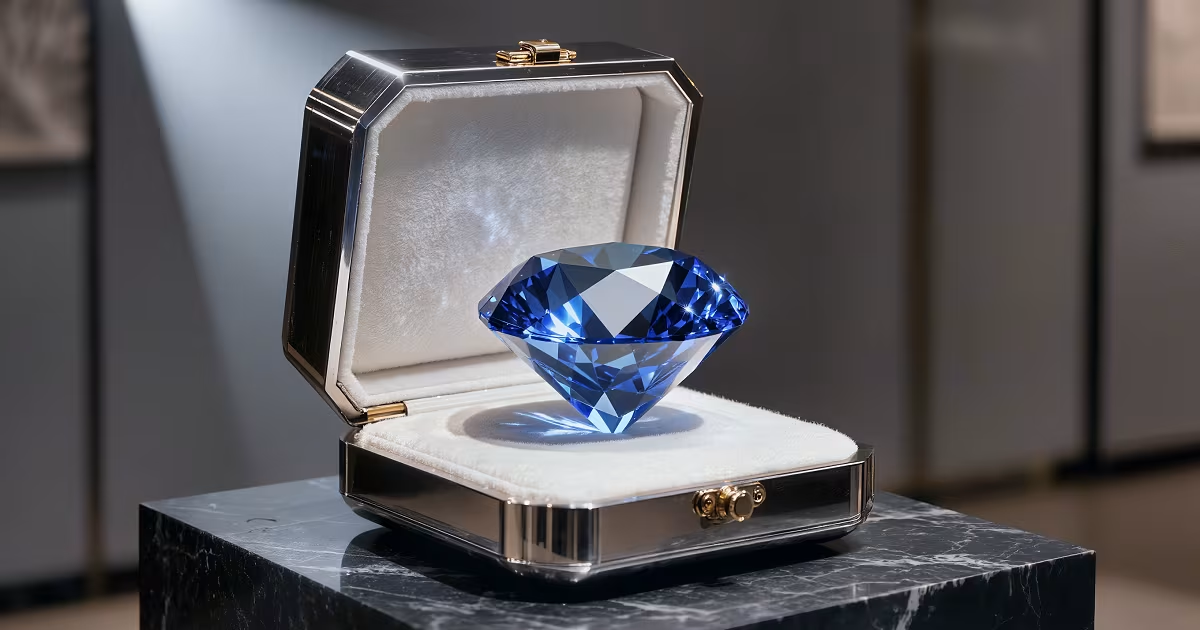
Blue stone cut from the French Blue, from an Indian crystal Tavernier brought out in the 1600s. Recut after the Revolution. Evalyn Walsh McLean wears it. Winston gives it to the Smithsonian, 10 November 1958.
077°01'00 W
1. Public Record
Hope Diamond. A blue stone cut from the French Blue, itself cut from a larger Indian crystal. Jean-Baptiste Tavernier brings a blue out of India in the seventeenth century. The French crown loses it in the Revolution. It reappears, recut, in London and then in American hands. Evalyn Walsh McLean wears it and buries people. Harry Winston gives it to the Smithsonian in 1958 so the curse can live under glass with a label. The stone is still the most stopped-at object in the hall.
The curse is a newspaper product that outsold the geology. Owners died because people die, some of them rich and public. The stone is real. The body count hung on it is a sales floor. The museum is the honest ending: a diamond that no longer has to pay a family in funerals to stay famous. Gemmology is quieter than the caption and is the only part this folder will treat as typed.
A blue. A recut. A curse that needed headlines more than heirs.
Harry Winston gives it to the Smithsonian in 1958 so the curse can live under glass with a label.
Winston's gift is the kindest thing that happened to the stone. A vault does not stop a caption. It does stop a necklace from having to attend another funeral to earn its keep.
2. Date of Incident
Indian origin early. Tavernier seventeenth century. French loss in the Revolution. Smithsonian gift 10 November 1958. Curse copy ongoing.
3. Location
National Museum of Natural History, Washington. Approximate 38°53 N 077°01 W.
4. Official Narrative
Smithsonian mineral. Official narrative is gemmology and history of ownership. Curse is interpretation.
5. Witness Layer
Tavernier. French crown. McLean household. Winston. Museum visitors who come for the caption and stay for the colour.
The curse is a newspaper product that outsold the geology.
Copy needs deaths in sequence. Geology needs a lattice and a colour. Both exist. Only one of them belongs on the official label.
Owners died because people die, some of them rich and public.
McLean's dead are a family tragedy wearing a necklace. That is allowed as grief. It is not allowed as a mechanism in the stone.
6. Recovery Logistics
The stone in a vaulted case. Provenance paper. No supernatural docket.
7. Assessment
A diamond does not need a curse. It needs a colour and a story of theft. The French Blue to Hope recut is the real plot. McLean's dead are a family tragedy wearing a necklace. Winston's gift is the only kind ending the stone has had.
This folder files Hope as a blue with a sales curse. Keep the geology first. Keep the headlines in the gift shop. Do not add a body to the label that the museum will not add.
8. Materials & Remains
The diamond. Ownership chain. Smithsonian case.
9. Key Personnel
Jean-Baptiste Tavernier : The out of India.
Evalyn Walsh McLean : The American wearing.
Harry Winston : The gift.
10. Aftermath
The stone stays the most visited object in the hall. The curse stays a caption people want. The geology stays the quieter room behind the glass.
11. Current Archive Status
Status: Blue stone. Curse as copy. Case in DC.
Confidence: High that the diamond exists and reached the Smithsonian in 1958. Low that a curse is typed. High that the newspaper count outran the geology.
Filing note
An Indian blue, a French crown, a recut, an American woman who wore it to funerals, a jeweller who put it under glass so the stone could stop earning its fame in obituaries.
The curse outsold the geology. That is the only hex this page will sign.