GULF BREEZE
Gulf Breeze, Florida, November 1987. Ed Walters stops for a light and starts a Polaroid stack. Neighbours log nights of their own. Later an attic model. The fork stays open.
087°10'00 W
1. Public Record
Gulf Breeze, Florida, November 1987. Ed Walters is driving near home with a Polaroid in the car because 1987 still thinks a Polaroid is how you prove a thing. The object he stops for does not wait like a water tower. He takes pictures. Over the following months there will be more pictures, more nights, a road, a house, a town that has to decide whether it has a photographer or a problem.
The photographs are sharp in a way most 1980s backyard pictures are not. That sharpness is why the file lived and why the file got accused. Later a model in an attic becomes the cheap close. Walters says the model is not the night. The town splits along that sentence and does not really heal.
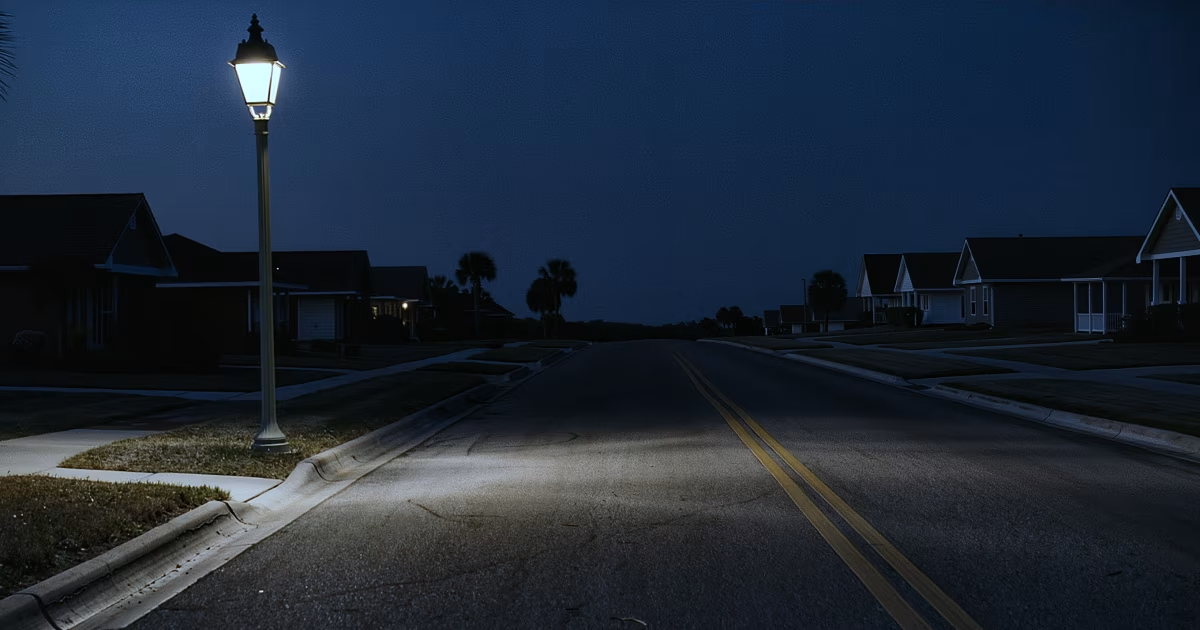
A Florida panhandle road at night is already full of aircraft and pranks. Walters is a contractor, not a priest. He has neighbours. Neighbours are a worse audience than a magazine. Some of them still said they saw lights of their own. That chorus is either contagion or the reason one man's Polaroid was never allowed to be only his.
I just wanted a picture. Then I couldn't leave it alone.
Wanting a picture is the 1987 sentence. Leaving it alone would have been cheaper. He did not leave it alone. The stack of Polaroids is either persistence or production. Both cost a marriage of a town to an argument.
2. Date of Incident
First public photographs November 1987, Gulf Breeze, Florida. Further nights through 1988 in the same weather.
3. Location
Gulf Breeze, Florida. Approximate 30°22 N 087°10 W.
4. Official Narrative
Local paper and later national attention. No recovery. Official-adjacent talk later offers a model, a contractor with a deadline, and a town that wanted a show. Multiple other witnesses sit next to that talk and do not always lie down.
5. Witness Layer
Ed Walters. Family. Neighbours who logged lights of their own. MUFON investigators. Later critics with the attic model.
They found a model. They did not find my nights.
A model is a real object. Nights are a pile of other people's windows. The file has to carry both. This page will not retire the photographs because an attic held foam, and will not retire the attic because a road held a light.
1987 is late enough for video and still produced Polaroids. That choice is part of why critics never sat down. Instant film is both evidence culture and a tool you can aim at a dinner-plate on a string. The town had to live inside that fork.
6. Recovery Logistics
Polaroid stack. Later model as exhibited by critics. No craft from the bay.
7. Assessment
Start with the first night and the first print. A contractor who stops a car to take a picture is either lucky or prepared. Prepared is the ugly word. Lucky is the other one. Other witnesses in the same weeks stop this being only one man's attic. They do not stop it being a town that wanted to be special.
The model matters. So do the people who were not in Walters' house. If you throw out the whole year because foam existed, you are doing the night a convenience. If you keep every print as a landing, you are doing the attic a convenience. The honest file is the fork, left open, with a road in it.
8. Materials & Remains
Polaroids. Press. A model in later critical weather. No metal from the bay.
9. Key Personnel
Ed Walters : The camera.
Gulf Breeze neighbours as logged : The other windows.
10. Aftermath
The town becomes a sentence. Walters keeps the pictures. Critics keep the model. The bay keeps being a bay. 1987 does not come back to settle it.
11. Current Archive Status
Status: Polaroids. Model. Fork open.
Confidence: High that Walters produced a 1987-88 Polaroid series in Gulf Breeze and that other locals logged lights. Low that every print is a craft. Low that the model ends every night. The fork is the file.
Filing note
A panhandle road, a contractor with instant film, a town that had to look at the same pictures, an attic that later held foam.
He could have taken one picture and gone home. The stack is what turned a night into a marriage with an argument.