COYAME
25 August 1974 in the circulating paper. Near Coyame, Chihuahua. Radar track from the Gulf, a small Mexican plane in the same cell, a silver disc about sixteen feet. No public tray. Document not a stamped log.
105°06'00 W
1. Public Record
Coyame, Chihuahua, 25 August 1974 in the document that made the name. A paper later circulated as an American radar-and-recovery account says an unknown is tracked from the Gulf at high Mach, turns into Mexico, and drops off near Coyame. A small Mexican aircraft is said to vanish in the same cell. Dawn search finds the plane and, in the telling, a silver disc about sixteen feet across, convex both sides, no doors, no windows, polished like steel. Mexican troops go in. The darker versions give a second party finding burned men and abandoned trucks. United States recovery is written in as the ending that never appears on a Mexican docket.
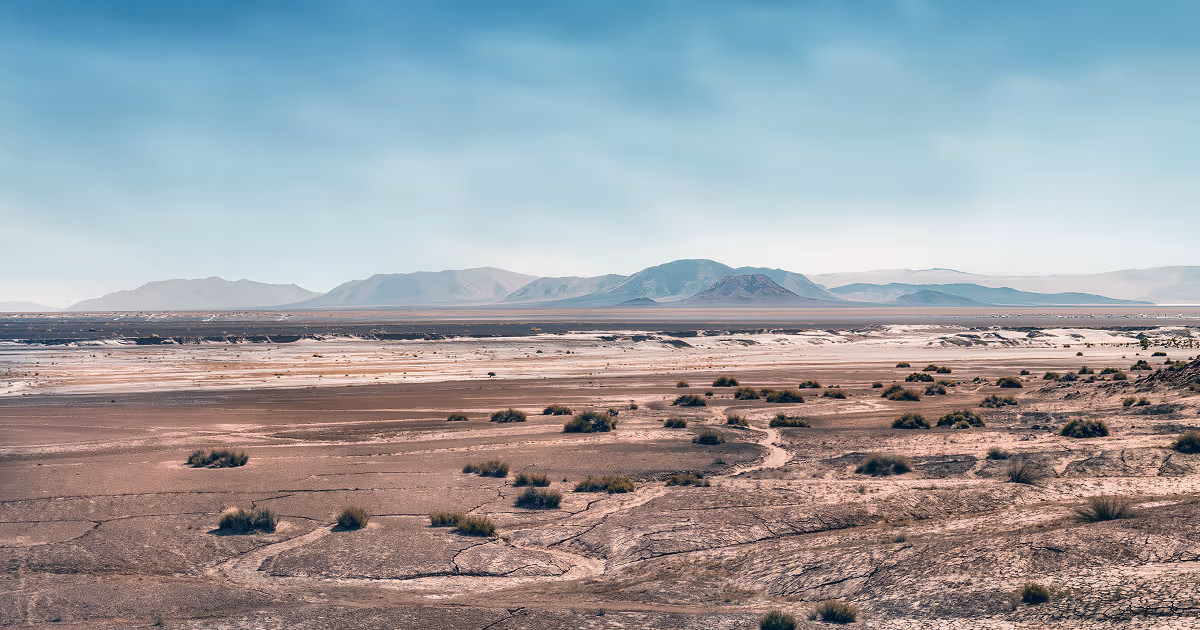
No ministry in Mexico has stood this paper up as its own. Radar numbers in the circulating text read like a story that wants to sound like a log. Chihuahua has desert enough to hide a wreck and paper enough to invent one. This folder will not weld Coyame to Roswell because the nickname is easy.
A town on the map. A document that wants to be a log. A disc that never reached a public tray.
Sixteen feet five inches in diameter, convex on both surfaces, no visible doors or windows.
2. Date of Incident
25 August 1974 in the document. Public circulation years later.
3. Location
Near Coyame, Chihuahua. Approximate 29°28 N 105°06 W.
4. Official Narrative
No Mexican official recovery this folder can cite. No United States official claim of a 1974 Coyame take. Official narrative is absence. The paper is unofficial.
5. Witness Layer
Unnamed radar and troop voices inside the document. Later Mexican press retelling the same sheet. No named farmer this folder can stand next to the disc.
They both disappeared in the same area and at the same time.
No ministry in Mexico has stood this paper up as its own.
6. Recovery Logistics
A circulating document. No public disc. No public troop-loss file this folder can match to the burned-men paragraph.
7. Assessment
Treat this like the L-9 sheet next to Ellsworth. A typed story is not a night. Sixteen feet five inches is the kind of precision a log loves and a fable borrows. Burned faces without blast are the kind of horror a later writer adds. Absence of a Mexican docket is not proof of a take. It is also not proof of a quiet Tuesday.
This folder files Coyame as an unverified recovery narrative with a town attached. Keep the date and the diameter because those are the sentences the paper chose. Do not hang a Mexican Roswell on them until a ministry or a named crew stands up.
8. Materials & Remains
The circulating account. Later press. No public hardware.
9. Key Personnel
Unnamed radar and troop voices in the document : The only speakers the paper gives.
10. Aftermath
Coyame becomes a paperback Roswell. Chihuahua keeps its desert. The disc stays a paragraph.
11. Current Archive Status
Status: 25 Aug 1974. Paper disc. No public tray.
Confidence: Low that the circulating document is an official log. Low that a disc was recovered. High that the town name now carries the story.
Filing note
A Chihuahua town, a radar paragraph that wants to sound like a scope, a small plane in the same cell, a silver disc with a tailor's measurements, troops who go in and do not come back in the darker telling, no ministry willing to put its stamp on the sheet.
Sixteen feet five inches. Precision is not the same thing as a witness.