GORMAN DOGFIGHT
1 October 1948, from 21:07. Fargo. George Gorman in a P-51 chases a light with no wing and no fuselage. Tower and a Piper Cub also see it. About twenty-seven minutes. Balloon on paper. He landed convinced.
096°49'00 W
1. Public Record
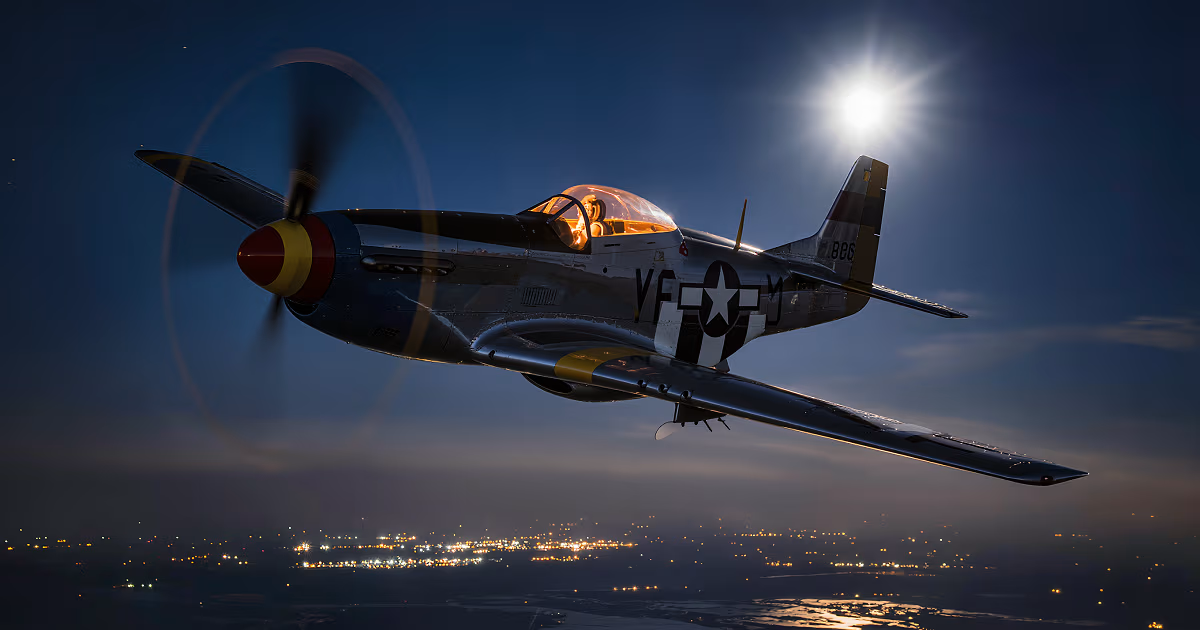
Fargo, North Dakota, 1 October 1948. George F. Gorman, North Dakota Air National Guard, in a P-51 after a cross-country hop, staying up for night practice near Hector Airport. He sees a Piper Cub about five hundred feet below, outline clear. Then a light to the west with no wing and no fuselage. At 21:07 he calls Hector tower and asks what else is up. The tower says nothing but him and the Cub. They call the Cub. Dr A.D. Cannon and his passenger can see the light too.
Gorman goes after it. He closes to about a thousand yards and later writes: six to eight inches across, clear white, no fuzz at the edges. For twenty to twenty-seven minutes he climbs, dives, and once meets it head-on. The light is over the field. In the tower, controller L.D. Jensen puts binoculars on it and still sees no airframe. Cannon lands, walks up to the tower with his passenger, and watches from the glass. Controller H.E. Johnson will say the light opened distance on the Mustang. Gorman lands convinced he has fought something with intent. Air Weather Service has a lighted balloon off Fargo about 20:50. Project Sign interviews everyone, takes him seriously, then the folder moves through Grudge and Blue Book and closes balloon plus pilot.
A Guard hop. A Cub that could be drawn. A light that could not. A balloon on the stamp.
It was about six to eight inches in diameter, clear white and completely without fuzz at the edges.
2. Date of Incident
Night of 1 October 1948, from about 21:07 for twenty to twenty-seven minutes.
3. Location
Over Fargo and Hector Airport, North Dakota. Approximate 46°54 N 096°49 W.
4. Official Narrative
Blue Book: lighted weather balloon. Official narrative is balloon plus Gorman's own closing geometry. Gorman did not buy that close in public. Ruppelt later called the night one of the classics.
5. Witness Layer
Gorman in the P-51. Cannon and passenger in the Cub, then in the tower. Controllers Jensen and Johnson. Sign interviewers.
Jensen viewed the object through binoculars but could see no form or shape around the light.
Fast enough to increase the spacing between itself and Gorman's fighter.
6. Recovery Logistics
No object recovered. Balloon release time on a weather sheet. P-51 back on the line.
7. Assessment
A balloon can hold a light. A balloon does not usually fly a twenty-minute scissors with a Mustang while a tower with binoculars still cannot find a bag. That is the argument and it has not improved. Gorman was current. Cannon could see the Cub's outline and could not give the other light a wing. Johnson watched the gap open.
This folder leaves the 20:50 balloon on the weather sheet because the sheet is real. It leaves Gorman's six-to-eight-inch, no-fuzz sentence beside it. A Guard pilot talking closing speed is not a mystic. The tower was not in his cockpit and still had a problem.
8. Materials & Remains
Sign / Blue Book paper. Gorman's statement. Tower names. No wreckage.
9. Key Personnel
George F. Gorman : P-51.
A.D. Cannon : Piper Cub.
L.D. Jensen / H.E. Johnson : Hector tower.
10. Aftermath
The case becomes a slide in every lecture that needs a pilot. The balloon remains the official last word. Fargo remains a night sky.
11. Current Archive Status
Status: 1 Oct 1948. P-51. Light turns. Balloon on paper.
Confidence: High that Gorman, the Cub, and the tower all had a light for many minutes. Low that a helio balloon is a complete close. Low that the object was typed.
Filing note
A Friday night Guard flight, a Cub with an outline, a light without one, binoculars in a tower that still found no bag, a weather sheet with a 20:50 release, a folder that wrote balloon and went home.
He landed convinced. The folder did not. Both sentences are still in the drawer.