HINTON AMPNER
Mary Ricketts, 1765. Slamming doors, voices she could not quote. Old house later demolished.
001°09'00 W
1. Public Record
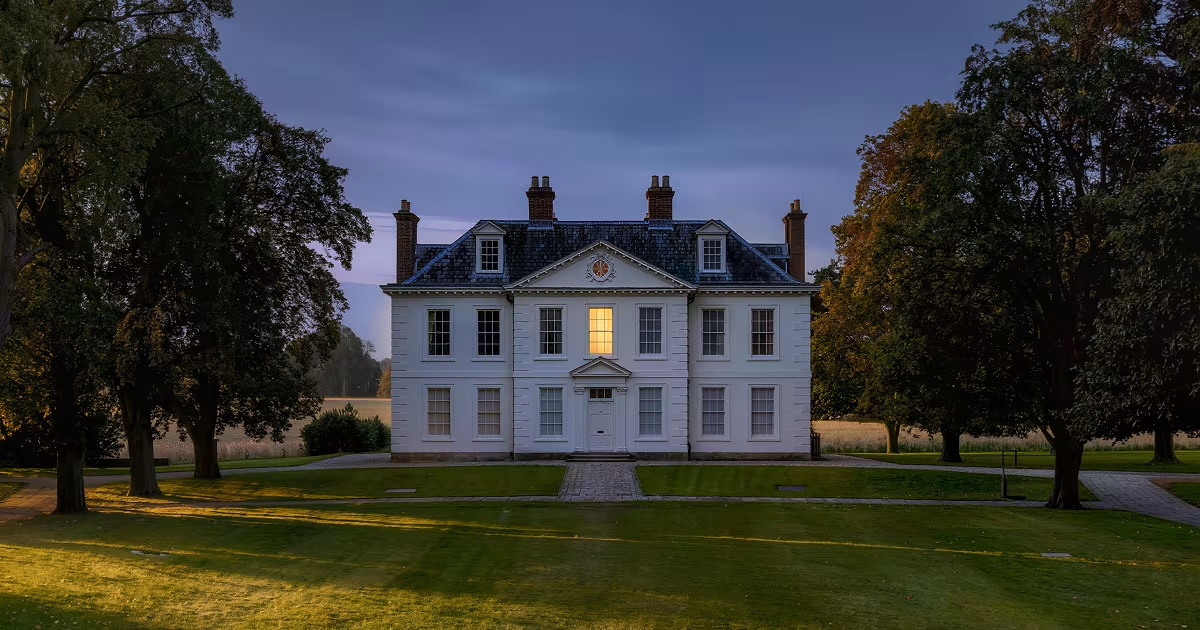
Hinton Ampner, Hampshire. The house that stood about fifty yards from the later National Trust pile. Edward, Lord Stawell, dead of apoplexy in the parlour. Talk of a drab coat in moonlight, hands behind the back as he had stood. Servants leaving.
Mary Bilson-Legge, Baroness Stawell, rents to William Henry Ricketts and Mary Jervis Ricketts, 1765, money from Jamaican holdings. William away for years. Mary writes: soon after we were settled I frequently heard noises in the night, as of people shutting, or rather slapping doors with vehemence. Locks changed. The slams continue.
Rustle of a woman's skirts. A man's heavy step to the bed. A shrill female voice and two male voices next to her, words she could never catch. Gentleman's Magazine prints a version in 1872 as A Hampshire ghost story. Henry James is later said to have taken a turn of the screw from this weather.
The old house comes down. The Trust house is not the room she lay in. Local talk after Stawell's death had already shunned the place at night. The Ricketts tenancy is when the slams become a lettered case. A buried-child story attaches later and should be kept as later. Mary's sentences are the primary.
Soon after we were settled at Hinton I frequently heard noises in the night, as of people shutting, or rather slapping doors with vehemence.
2. Date of Incident
Stawell dead mid-century. Ricketts tenancy from 1765, peak while William is in Jamaica. Magazine 1872.
3. Location
Hinton Ampner, Hampshire. Approximate 51°03 N 001°09 W.
4. Official Narrative
A tenancy that ended. Official later use is heritage ghost. No court named a spirit. The standing house is a different build.
5. Witness Layer
Mary Ricketts. Household. Servants who would not stay. Later magazine readers. James as a possible borrower.
One of the most haunted houses in Georgian England.
6. Recovery Logistics
Mary's letters as reused in 1872. The demolished fabric. No object from under a bed.
7. Assessment
A letter-and-lock file. Keep William's absence so the nights have a household shape. Keep the changed locks, which is the rational first move. Voices you cannot parse are more useful than a named ghost in a drab coat. Do not let the Trust garden write 1765. Do not promote the later infant-in-the-wall as if Mary filed it. James can sit in aftermath, not in the parlour.
8. Materials & Remains
Gentleman's Magazine 1872. Family letters as excerpted. Later house, different footprint.
9. Key Personnel
Mary Ricketts : The letters.
William Ricketts : Away.
Lord Stawell : The parlour death and the coat.
10. Aftermath
The old house gone. The name remains on the Trust map as a ghost story. 1872 is how most readers meet her slams.
11. Current Archive Status
Status: Ricketts letters, 1765 on. House later demolished. Magazine 1872.
Confidence: High that Mary wrote of slams, steps, and voices during the tenancy. High that the later standing house is not that fabric. Low that Stawell walks. Low that the buried-child tale is contemporaneous.
Filing note
A parlour death, a coat in moonlight, a woman alone with children and Jamaican money, locks changed, doors that still slammed, skirts, a step to the bed, three voices she could hear and never quote.
Rather slapping doors with vehemence. Her first verb. Not a chain. Not a scream. A house that shut itself hard, over and over, after the locks were already new.