ÉMILIE SAGÉE
1845-46, Pensionnat of Neuwelcke. French teacher seen in two places at once by a classroom. Dismissed after eighteen months. She said it was the nineteenth time.
025°25'00 E
1. Public Record
1845-46, Pensionnat of Neuwelcke, Livonia, a Moravian school for daughters of the Baltic German gentry. Forty-two girls. Among them Julie von Güldenstubbe, thirteen. A new French teacher arrived from Dijon: Émilie Sagée, thirty-two. Within weeks girls began to see her in two places at once.
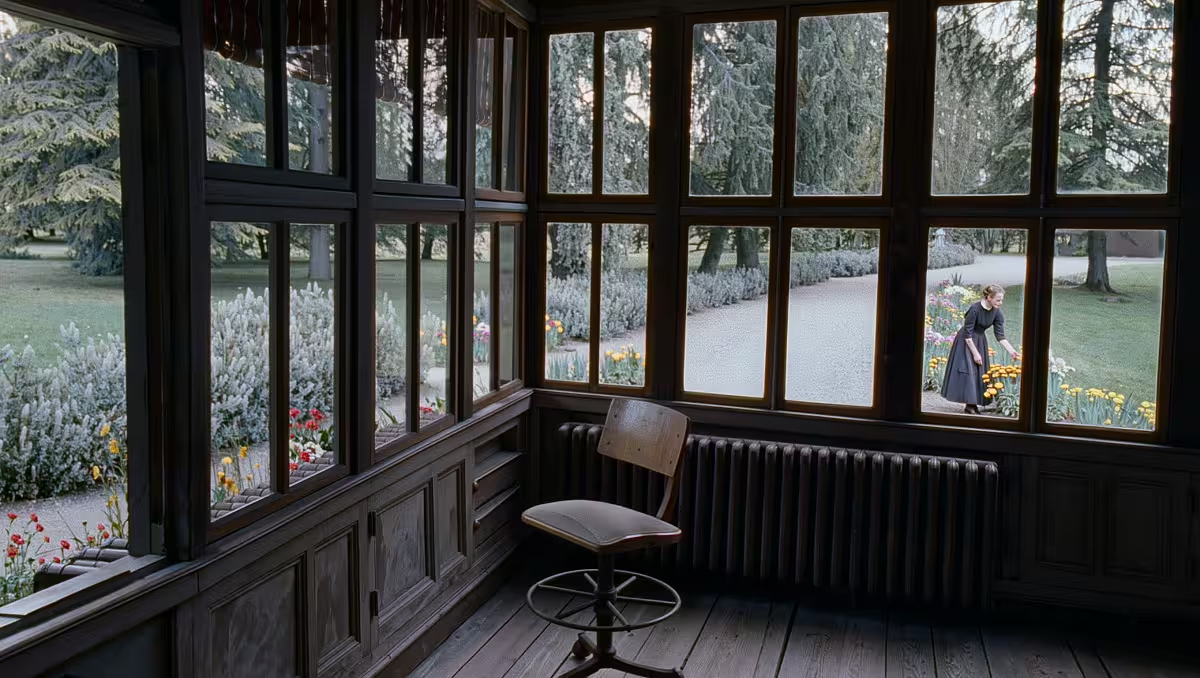
In class, while she wrote on the board, a second Sagée stood beside her and copied the arm. Antoinette de Wrangel fainted when two of her appeared at a dress fastening. The set-piece: all forty-two in a sewing room, Sagée visible through the windows picking flowers in the garden, and then a second Sagée sitting in the empty supervisor’s chair. After eighteen months only twelve girls remained. She was let go. Julie heard her say it was the nineteenth time, and very hard to bear. She had, she said, already left eighteen schools.
The story reaches the archive through Robert Dale Owen in 1860, who had it from Julie. There is no second independent school ledger that names the double.
Ah! the nineteenth time! It is very, very hard to bear.
2. Date of Incident
School year 1845 into 1846. Owen’s book 1860. No parish employment record that the archive can put beside the memoir.
3. Location
Pensionnat of Neuwelcke, near present-day Valmiera, Latvia. Approximate 57°32 N 025°25 E. A garden, a blackboard, a sewing room.
4. Official Narrative
No imperial inquiry. A school that lost parents and then lost a teacher. Official narrative, such as it is, is an employment that ended. The double lives in Owen and in Julie’s telling.
5. Witness Layer
A classroom of girls for the board. Forty-two for the garden and the chair. Julie as the named transmitter. Sagée herself, on Julie’s word, could not see the other one. That is the cruel part of the file if the file is true: the only person who never got the proof was the woman it cost eighteen posts.
The one by the side of the other.
6. Recovery Logistics
No photograph. No second body. A memoir fifteen years later. The school is a site in Livonian memory and not a lab.
7. Assessment
One of the few doppelgänger cases with a named classroom rather than a single frightened cousin. It is also a single-chain story: Julie to Owen to everyone else. Mass hysteria in a closed girls’ school is a live reading. So is a teacher who could not keep a post because children said they saw her twice. Do not build a physics out of Owen’s chapter. Do not throw the chapter out because physics is easier.
8. Materials & Remains
Owen, 1860. Julie’s testimony as he frames it. No garment, no second signature.
9. Key Personnel
Émilie Sagée : Teacher. Dijon, by her account.
Julie von Güldenstubbe : Pupil. The chain.
Antoinette de Wrangel : The dress.
Robert Dale Owen : The book.
10. Aftermath
Every later double is measured against the garden and the chair. Sagée vanishes from employment history after Neuwelcke. That silence is either the end of a career or the end of a story.
11. Current Archive Status
Status: Classroom doppelgänger tradition, Neuwelcke, 1845-46. Single memoir chain. No second body.
Confidence: High that Owen printed Julie’s account in 1860. Moderate that a teacher named Sagée left a Livonian school after parents withdrew girls. Low that the double can be tested. Low that eighteen prior posts can be listed from surviving ledgers.
Filing note
A French teacher, a Baltic school, a whole sewing room looking out at a woman picking flowers and then looking in at the same woman in a chair. Parents took their daughters home. She said it was the nineteenth time.
She could not see the other one. Forty-two girls and a garden, and the only person the proof never visited was the woman it kept dismissing. That small private blindness makes the empty chair colder than any later chapter about doubles.