DRUMMER OF TEDWORTH
1661-63. Mompesson seizes William Drury's drum. The house answers in tattoos. Glanvill prints it. Pepys reads it at Christmas.
001°40'00 W
1. Public Record
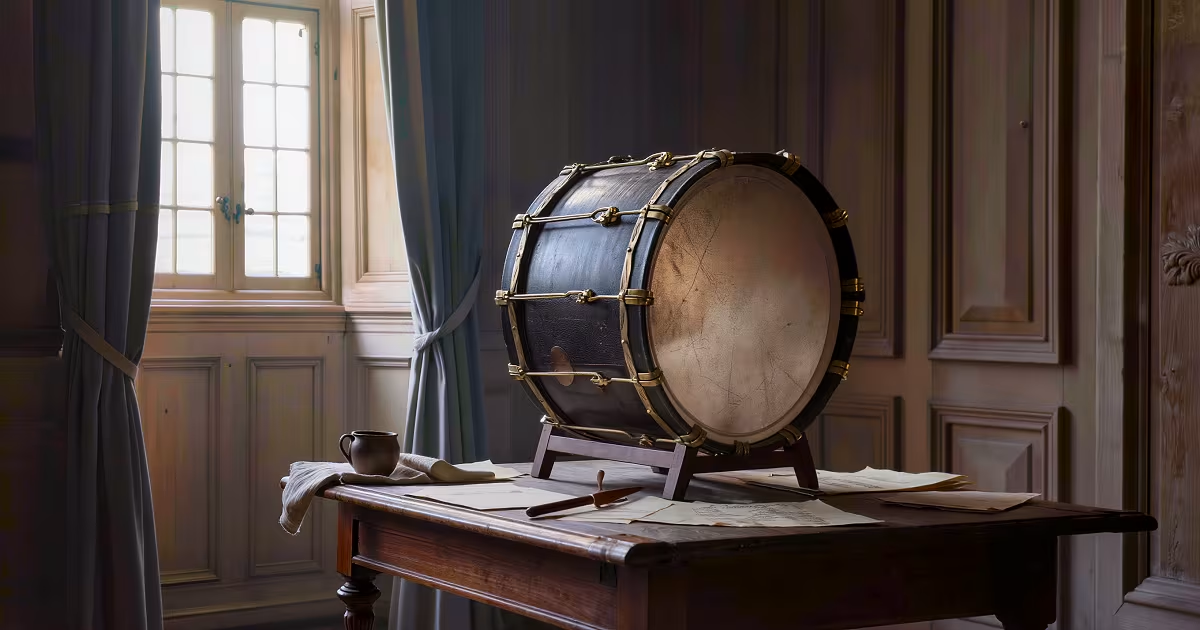
March 1661, Ludgershall, Wiltshire. John Mompesson, landowner, excise man, militia officer, finds William Drury drumming with papers that will not stand. Drury does hocus-pocus, dances through hoops, takes money. Mompesson has the drum off him. While Mompesson is away the bailiff sends the drum to the house at Tedworth. When Mompesson comes home the nights have changed. Thumping. An invisible drum beating Roundheads, Cuckolds, Tattoo. Knocks. Children lifted. A Bible in the ashes. Shoes thrown. Chamber pots on beds. Lights. A servant speaking of a great body with two glaring eyes. Sulphur. Drops of blood. A horse found with a hind leg forced into its mouth. Joseph Glanvill visits in 1663 and hears scratching under a bed in the children's room. He puts the case into A Blow at Modern Sadducism and then into Saducismus Triumphatus, 1681, with a devil and a drum on the later frontispiece. Samuel Pepys, Christmas Day 1667, has Elizabeth read it to him and writes that it is a strange story of spirits and worth reading indeed.
Drury is taken at Gloucester in 1662 or 1663 for theft, slated for transport, and is said to have told a servant that Mompesson would have no quiet until the drum came back. He slips the barge. Under the 1604 Act the house is walked into court. Jurors split on witchcraft and convict him on the older crimes. The noises last, with gaps, into 1663. Tedworth is now Tidworth. The drum is the object the whole file turns on.
It was because he took my drum from me; that trouble had never befallen him, and he shall never have his quiet again, till I have my drum, or satisfaction from him.
2. Date of Incident
Drum seized March 1661. Noises from Mompesson's return. Glanvill 1663. Pepys 1667. Glanvill's book in stages to 1681.
3. Location
Tedworth, Wiltshire, now Tidworth. Approximate 51°14 N 001°40 W.
4. Official Narrative
A magistrate's house and a vagrant's drum. Court took the theft. Official narrative after Glanvill is a celebrated disturbance used against Sadducees. No drum returned as a verdict.
5. Witness Layer
Mompesson. The children. The servant and the horse. Glanvill under the bed. Drury in the later confession layer. Pepys as the reader who kept the story moving.
A strange story of spirits and worth reading indeed.
Scratching noises under a bed in the children's room.
6. Recovery Logistics
The confiscated drum. Glanvill's pages. No instrument found beating itself when a light was brought.
7. Assessment
A seized-object file. Keep the counterfeit papers and the twelve weeks of drumming in town so the house noises have a grievance under them. Keep the horse, which is the sentence later writers skip because it is too much. Glanvill needed a modern case against people who said spirits were finished. That use is part of why we still have the nights in writing. Do not tidy Drury into only a witch. Do not tidy Mompesson into only a credulous squire. A drum taken from a man who lived by a drum is the whole engine.
8. Materials & Remains
Saducismus Triumphatus. Family and visitor notes as Glanvill printed them. The drum itself is not in a museum case.
9. Key Personnel
John Mompesson : The house. The seizure.
William Drury : The drummer.
Joseph Glanvill : The visit and the book.
Samuel Pepys : The Christmas reader.
10. Aftermath
Tedworth became the English case later houses were measured against. Wesley's Epworth sat in the same family of knocks. Drury vanishes from the transport record. The frontispiece outlived the furniture.
11. Current Archive Status
Status: Tedworth 1661-63. Drum seized. Glanvill printed it. Drury transported, then gone.
Confidence: High that Mompesson seized a drum and that the house reported nights of noise. High that Glanvill visited and published. Low that Drury's witchcraft is demonstrated. Low that every listed wonder, including the horse, stands as observed fact.
Filing note
A militia officer, a vagrant with a drum and bad papers, a house that started answering in tattoos and roundheads, a visitor on his knees by a child's bed, a diarist on Christmas morning, a man who said he would have his instrument back or there would be no quiet.
He shall never have his quiet again, till I have my drum. Not a curse in a grimoire. A sentence a servant took to court as the reason the nights would not stop.