MIDNIGHT CLIMAX
225 Chestnut Street, 1955-65. George White. Two-way glass. Unwitting doses. Named in the 1977 hearing.
122°24'00 W
1. Public Record
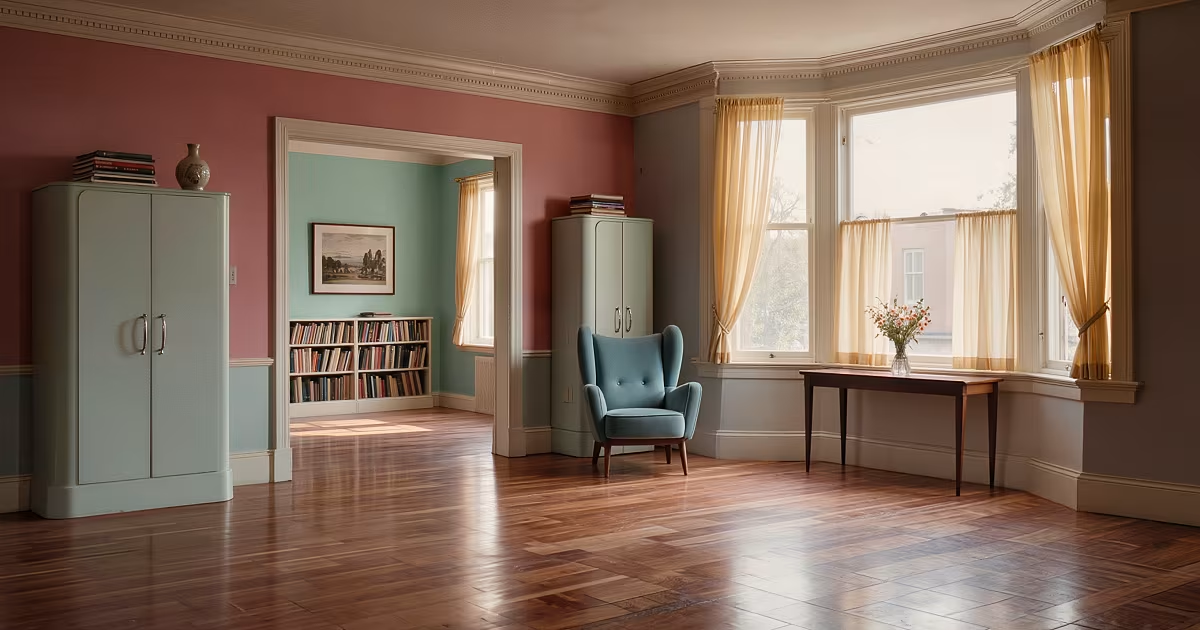
San Francisco, 1955 to 1965, and sister rooms. MKUltra subproject work run on the West Coast by George Hunter White, Federal Bureau of Narcotics, seconded to Sidney Gottlieb's shop. White names it Midnight Climax. The main San Francisco room is an L-shaped apartment at 225 Chestnut, Telegraph Hill, water and the Bay, a short walk up from North Beach. Prostitutes on Agency money bring men home. Drinks are dosed, LSD the famous bottle, the men unaware. Behind a two-way mirror, White and others watch, drink, and log. Recorders ride in electrical outlets. Walls carry bondage stills and Toulouse-Lautrec posters because White wants a mood. At least three Bay Area safe houses sit in later counts. New York had rooms on the same pattern. Gottlieb, asked later about the prostitutes, said it was the modus operandi of that drug culture. White is a large narcotics hunter with overseas heroin cases in his clippings. Few of the men in those clippings know he is also running a theatre for Gottlieb.
Church and the 1977 Senate intelligence hearing put the caption on the record. Senator Kennedy walks Admiral Stansfield Turner through the furniture. White's diaries, later in Stanford special collections, and declassified traffic fill the apartment in. The subjects did not consent. The operation is one of 149 Ultra subprojects and the one that looks most like a vice squad with a chemistry set. White writes about the work with a hunter's pleasure. That tone is in the file and is not a side note.
The involvement of prostitutes in the West Coast activity had to do with the MO, the modus operandi of this whole drug culture.
2. Date of Incident
Chestnut Street room 1955-1965. Sister houses in the same years. Public hearing 1977.
3. Location
225 Chestnut Street, Telegraph Hill, San Francisco. Approximate 37°48 N 122°24 W.
4. Official Narrative
An Ultra subproject. Official narrative after 1977 is that it happened, that subjects were unwitting, and that the Agency has no complete roster of who drank.
5. Witness Layer
White. Gottlieb. The women on the payroll. The men who were not told. Kennedy and Turner in 1977. Diary readers later.
White would turn on them, physically. He was a big tough guy.
6. Recovery Logistics
Hearing transcript. White's diary. Ultra fragments that survived the 1973 burn. No public list of dosed men.
7. Assessment
A safehouse file under Ultra, not instead of it. Keep the address. Keep the mirror. Keep Gottlieb's MO sentence, which is the shop describing itself. Consent is not in the furniture. Do not write Climax as the whole of Ultra. Do not write it as only a dirty joke from the 1950s. A Bureau man with a two-way glass and a dropper is the American version of a method other files in this cabinet dress in more Latin.
8. Materials & Remains
1977 hearing. Diary. Apartment long since a private address. No preserved mirror as a relic.
9. Key Personnel
George Hunter White : The room. The name.
Sidney Gottlieb : Ultra. The bottle.
The Chestnut Street women : The door.
10. Aftermath
Ultra's reputation after Church carries this room as the image people remember when they cannot remember a subproject number. Telegraph Hill did not keep a plaque.
11. Current Archive Status
Status: SF safehouse 1955-65. White. Unwitting doses. Named in 1977.
Confidence: High that the Chestnut Street room ran as described and that subjects were not told. High that White and Gottlieb are the names on it. Low that a full subject list exists. Low that every Bay Area house is mapped.
Filing note
A narcotics agent with a second employer, an L-shaped flat on a hill, posters chosen for mood, a glass that was not a window, drinks that were not only drinks, men who went home without a briefing, a 1977 hearing that had to describe the furniture out loud.
Recorders in the electrical outlets. Not a novelist's touch. The part of the room that kept working after the lights went off.