STAR DUST
2 Aug 1947. Lancastrian G-AGWH. Last Morse STENDEC. Tupungato wreck 1998-2000. Word unread.
069°46'00 W
1. Public Record
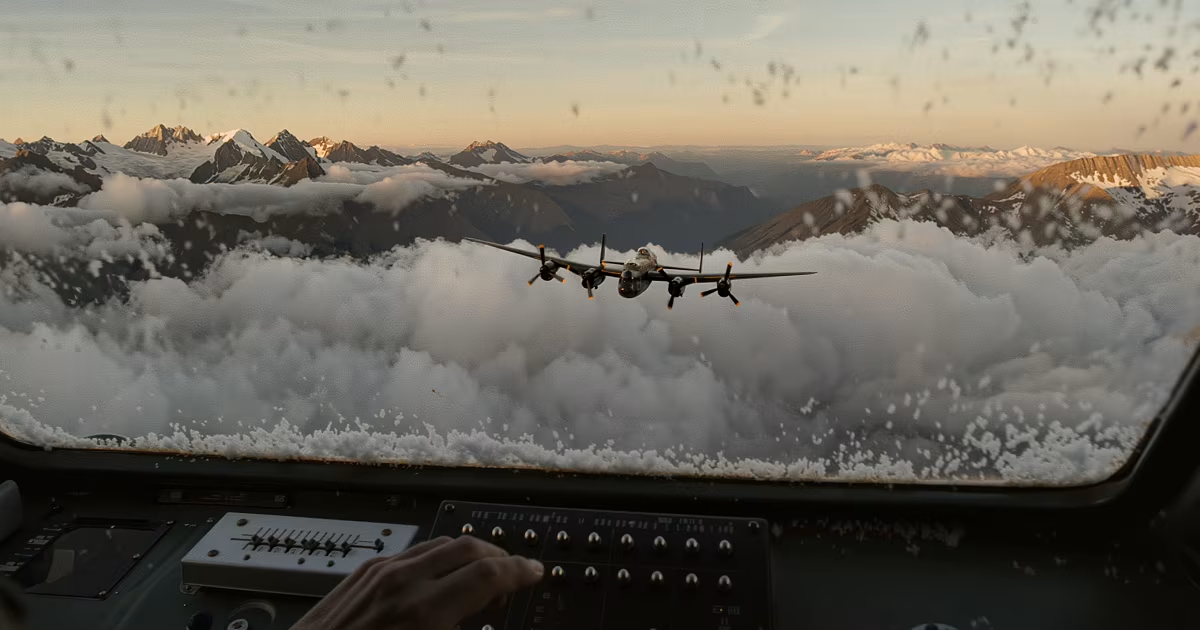
2 August 1947. British South American Airways Lancastrian G-AGWH, Star Dust, Buenos Aires to Santiago. Four Merlins. Crew and passengers, eleven souls. 13:46 off. 17:41 a Morse to Santiago, ETA 17:45, ending STENDEC. The Chilean operator says it was loud, clear, and very fast. He asks for a repeat. He gets STENDEC again. The aircraft does not arrive. Don Bennett runs a five-day search. An amateur SOS flickers and dies. The 1948 Ministry report puts the wreck somewhere in the Andes within forty miles east of Santiago and stops there.
1998 to 2000 the glacier on Tupungato gives the airframe back: a Merlin, undercarriage, human remains later identified. The last word does not come down with the metal. STENDEC stays an argument: a mistyped STD (Santiago), a weather code, a man sending too fast in thin air. The mountain had the rest of the sentence all along.
A Morse group. Fifty-one years of ice. No living voice after 17:41.
Ending with STENDEC.
2. Date of Incident
2 August 1947, 17:41 last Morse. Official report 1948. Wreck recovered 1998-2000.
3. Location
Mount Tupungato, Andes. Approximate 33°21 S 069°46 W.
4. Official Narrative
1948: lost in the Andes, probably east of Santiago. After the glacier: controlled flight into terrain in cloud. Official narrative never decodes STENDEC.
5. Witness Layer
Radio officer Harmer on the key. Santiago operator. Bennett on the search. Argentine and Chilean climbers fifty years later.
The reception of the signal was loud and clear but that it was given out very fast.
Aircraft wreckage not located to date, but considered to be in the Andes Mountains.
6. Recovery Logistics
Glacier melt. Engine and gear. Remains identified later. The Morse group still not in a wreck bag.
7. Assessment
A last-group file. Keep 17:41 and the double send. Keep the glacier so the mystery is the word, not the missing mountain. Do not write STENDEC as a code for a craft. Do not write the 1948 search as incompetence because ice can hide a Lancastrian for a generation.
8. Materials & Remains
1948 report. Recovered Merlin and undercarriage. The six letters.
9. Key Personnel
Radio officer Harmer : The key.
Santiago operator : Loud, clear, fast.
Don Bennett : The five-day search.
10. Aftermath
The letters outlive the ice. Families get names back from a glacier. The operator's "very fast" is still the best clue anyone has.
11. Current Archive Status
Status: 2 Aug 1947. STENDEC at 17:41. Tupungato wreck 1998-2000. Word still unread.
Confidence: High that the last Morse ended STENDEC and that the airframe later came out of Tupungato. High that the flight hit terrain. Low that the six letters have a settled expansion.
Filing note
A Lancastrian four minutes from Santiago, a key driven fast, a group nobody in the tower owned, a five-day search that found air, a glacier that waited until the century was almost over.
Given out very fast. That is the only description of the last human act on the flight. The mountain kept the airframe. It did not keep the meaning.