TRANS-EN-PROVENCE
8 January 1981. Renato Nicolaï watches a lead-coloured disc sit on his lower terrace. GEPAN measures pressure, heat, and depressed chlorophyll in the alfalfa. No hull.
006°29'00 E
1. Public Record
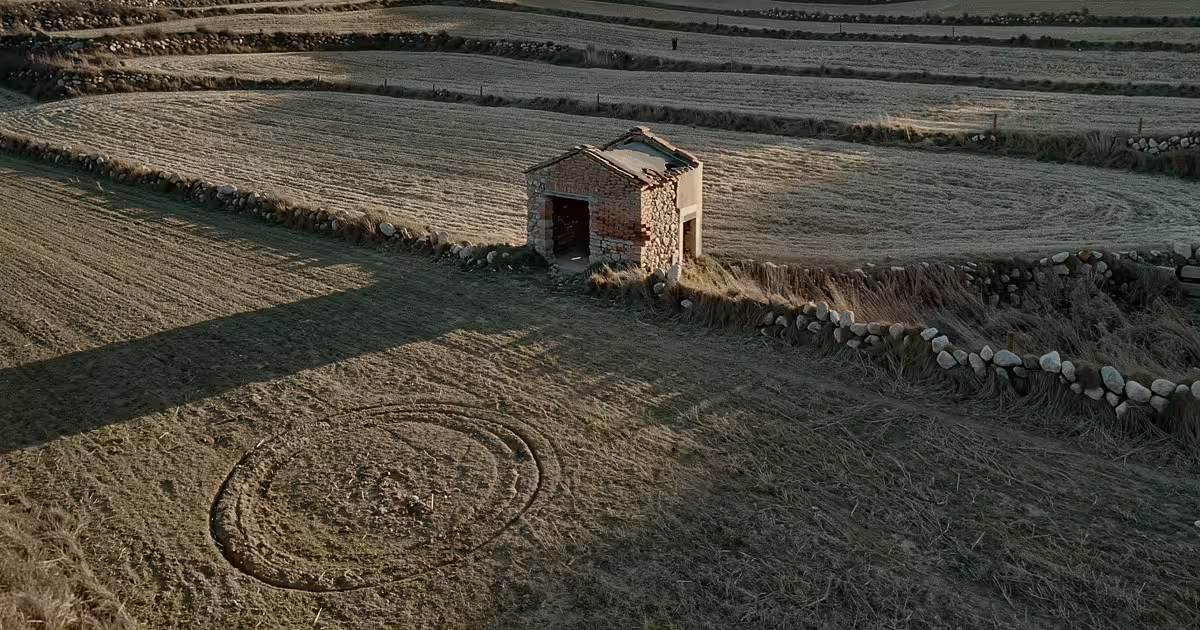
8 January 1981, about 17:00. Renato Nicolaï, fifty-five, was building a small pump-house on an upper terrace of his garden at Trans-en-Provence in the Var. A whistle. A lead-coloured object like two plates rim to rim, about two and a half metres across, came down on the lower terrace, sat for seconds, and went up and away to the north-east. Under it he saw what he took for feet or traps, the size of a mason’s bucket.
He walked down. A ring about two metres across, drag marks on the rim. Gendarmes the next day. Samples. Thirty-nine days later GEPAN, the CNES unit, took more soil and wild alfalfa. Technical Note 16: mechanical pressure of several tonnes, heat in the 300 to 600 °C band, iron and zinc traces, chlorophyll in the plants depressed 30 to 50 percent toward the ring. GEPAN would not name a single conventional cause that covered the lot.
The device had the shape of two saucers, one inverted on top of the other. It was the color of lead.
2. Date of Incident
8 January 1981, late afternoon. Gendarmerie 9 January. GEPAN on site in February. Note 16 dated 1983.
3. Location
Terraced garden, Trans-en-Provence, Var. Approximate 43°30 N 006°29 E. Lower terrace the landing. Upper terrace the witness.
4. Official Narrative
GEPAN / CNES: traces real, conventional single-cause list incomplete. That is as official as French space-agency paper gets on a garden. Later GEIPAN kept the file visible. Official narrative is a ring and a lab, not a recovered object.
5. Witness Layer
One man, thirty to forty seconds. His wife was in the house and did not see it. The gendarmes saw the ring. The value of the file is not the whistle. It is the alfalfa.
Under the machine I saw two kinds of pieces as it was lifting off. They could be reactors or feet.
Evidence indicates a strong mechanical pressure, probably due to a heavy weight, on the ground surface.
6. Recovery Logistics
Soil and plant samples. Photographs of two concentric rings, 2.2 and 2.4 metres. No object. Nicolaï kept working the terrace.
7. Assessment
The French physical-trace case that official paper would not laugh off. That is the weight. A sceptic can still argue a hoax plus a misread lab. The honest middle is a garden ring that CNES spent two years on and would not close with a tractor. Do not promote it to a fleet. Do not file it as a farmer’s story only.
8. Materials & Remains
Note 16. Gendarmerie samples. The ring, weathered.
9. Key Personnel
Renato Nicolaï : The terrace.
Gendarmerie, Draguignan : First samples.
GEPAN : Note 16.
10. Aftermath
The garden became a pilgrimage for a while. Nicolaï did not become a circuit speaker. The note is still the object worth reading.
11. Current Archive Status
Status: Single-witness landing with official soil and plant analysis, 8 January 1981.
Confidence: High that Nicolaï reported a landing the same afternoon and that gendarmes documented a ring the next day. High that GEPAN published anomalous lab figures. Low that a conventional single cause has been demonstrated to everyone’s satisfaction. Low that a craft exists in storage.
Filing note
A pump-house, a whistle, forty seconds, a lead-coloured thing the size of a small table, a ring the gendarmes could photograph the next morning. The alfalfa is what keeps it off the crank shelf.
He measured the feet against a mason’s bucket. Not a star map. A builder’s comparison from a man who had buckets on the terrace. That small trade measure makes the heat in the soil colder than any later argument about whether GEPAN should have existed.