RED BLUFF
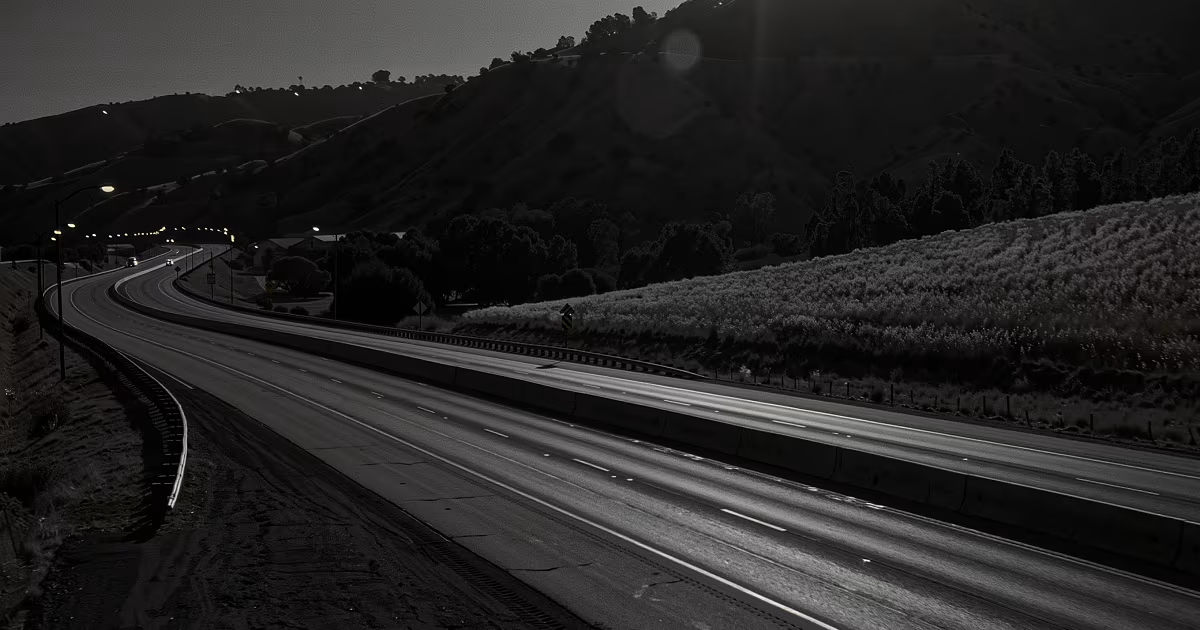
Red Bluff, California, 13 August 1960. CHP Stanley Scott and Charles Carson paced on US 99 by a light that feints at a field and then does not sit.
122°14'00 W
1. Public Record
Red Bluff, California, 13 August 1960. Highway patrolmen Stanley Scott and Charles Carson are on US 99 in the kind of dark that already belongs to trucks. The light they see is not a headlamp. It is large, low, and interested in the car. They try to close. It does not behave like traffic. At one point it looks as if it will sit down in a field. Then it does not. Other officers come. The night becomes a radio problem as well as a windshield problem.
CHP men are not selected for poetry. They write like men who may have to read the paragraph in court. That is why this night survived the cheap 1960s. A patrol car that spends an hour with a light is paperwork. Paperwork is harder to laugh off than a farmer's kitchen.
August in the Sacramento Valley is heat that does not fully leave at midnight. Two men in a car already know mirage, fatigue, and aircraft out of every little strip. They still called it something they did not have a code for.
It paced us. When we sped up, it did. When we slowed, it stayed with the hood.
Pacing is the word that kills planets. Planets do not keep station with a Ford. Aircraft can. Aircraft usually leave a noise and a destination. This one offered a field and then took the offer back.
2. Date of Incident
13 August 1960, night, US 99 / Red Bluff area, California.
3. Location
Near Red Bluff, Tehama County, California. Approximate 40°11 N 122°14 W.
4. Official Narrative
CHP reportage and later Blue Book-adjacent talk. No recovery. Official-adjacent closes offer aircraft, planet, and two tired officers. The multi-unit radio traffic is the part those closes have to buy.
5. Witness Layer
Stanley Scott. Charles Carson. Other officers who rolled. Later northern California compilers.
We thought it was going to land. Then it went up like it had changed its mind.
A landing that does not happen is still a decision in the air. The field keeps being a field. The patrol car keeps being a patrol car. Only the hour is different.
Other units hearing the same night matters. One car can dream. A radio net is a worse place to stage a dream because someone else can say they see nothing. Some of them did not say that.
6. Recovery Logistics
CHP paper. No object in a Tehama ditch.
7. Assessment
Start with two men whose job is already lights on roads. They know high beams, aircraft, and drunks. A light that paces a patrol car and feints at a field is either a very specific aircraft or the reason this county still has a 1960 card. Fatigue explains drift. It explains less well a second officer in the same seat seeing the same feint.
Blue Book weather around 1960 wants a planet. Planets are cheap and often correct. They are correct less often when the object keeps station with a moving hood. If this was an aircraft, it was an aircraft that declined to be one for a full report.
8. Materials & Remains
Patrol statements. Press. No metal.
9. Key Personnel
Stanley Scott : One seat.
Charles Carson : The other.
10. Aftermath
The night enters the California stacks. US 99 keeps being a truck route. Red Bluff keeps being a town you pass through. The field never gets a guest officially.
11. Current Archive Status
Status: Paced the hood. Field empty.
Confidence: High that Scott and Carson reported a low structured light on 13 August 1960 that paced their car. Low that it is typed. Pacing is the word that will not sit.
Filing note
A valley highway after midnight, two CHP men, a light that learned the speed of the car, a field that almost received something and then did not.
They wrote it like they might have to read it to a judge. That is why the hour is still sharp.