LITTLEDEAN HALL
Littledean Hall, Forest of Dean. Cellars read as late antique and Saxon. Jacobean skin 1612. Pyke story dated 1744. Official paper from 1986 names a greater horseshoe bat roost. Figures untyped.
002°29'00 W
1. Public Record
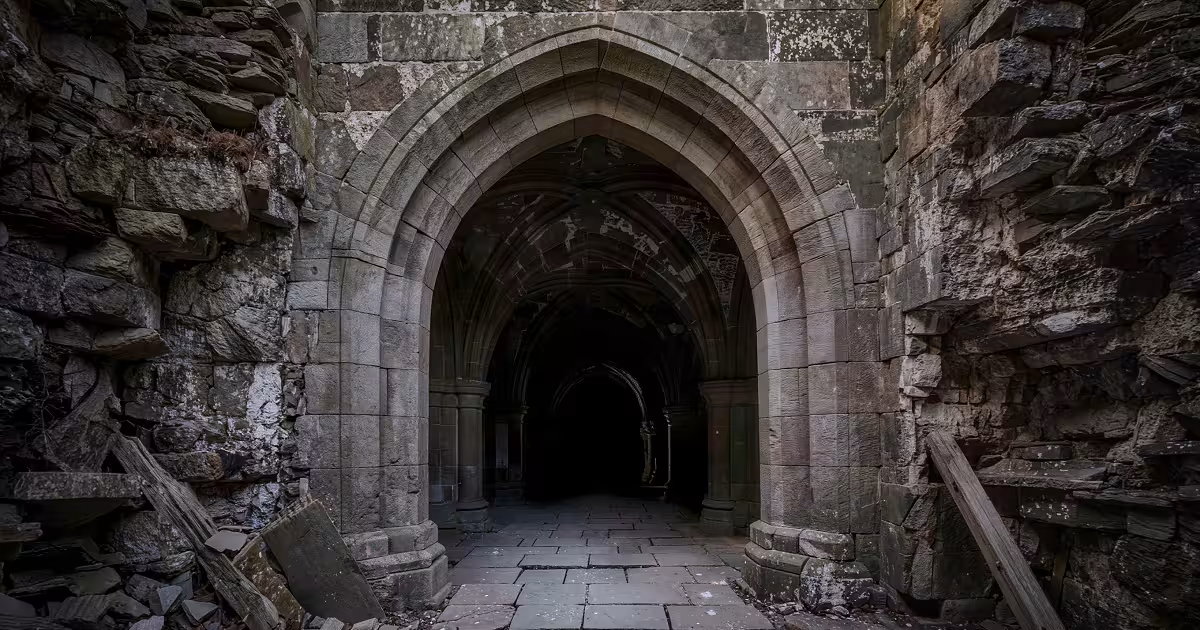
Littledean Hall sits above the village of Littledean in the Forest of Dean. The claim sold at the door is that it is among the oldest houses in the country still lived in. Testing in the cellars has been read as fifth-century. Saxon stone is visible. A Norman hall with crypt and undercroft sits on that. Records from 1080 already describe a substantial manor. The present skin is a Jacobean rebuild of 1612, with later paneling and the usual priest-hole talk that attaches itself to Catholic years in this county.
The coach house and cellar are a proven breeding roost for the greater horseshoe bat. Natural England lists the site as an SSSI and has watched it since at least 1986. Local talk says the bats were there decades earlier. That is the only animal in the building a ministry will sign.
Haunt writers give a Saxon woman in white in the oldest fabric, a Royalist officer in plumed hat on the upper corridor who walks through a wall, screams and heavy steps at night, and a servant known in the trade as the Black Boy, said to have killed his master Charles Pyke in 1744 after a bond that the brochures call brotherly. The house did see imprisonment and death in the Civil War. Those years are in the county paper. The named figures are in the tour.
2. Date of Incident
Fabric from late antique and Saxon testing. Norman hall. Jacobean house 1612. Pyke story dated 1744. Bat roost on official paper from 1986.
3. Location
Littledean, Gloucestershire. Approximate 51°49 N 002°29 W.
4. Official Narrative
Listed house. Key Wildlife Site. SSSI for the bats. Official narrative is masonry and a roost. It does not issue a haunting certificate.
5. Witness Layer
Occupants across the later centuries. Paying visitors. Natural England wardens. Haunt writers who arrived after the bats were already listed.
6. Recovery Logistics
No remains tagged to the 1744 servant walk. The roost is monitored on a schedule. The cellars are stone you can put a hand on.
7. Assessment
Start with the bats and the cellar dating. Those are the sentences a ministry will initial. 1744 should be kept as a named story, not upgraded to a complete criminal brief. The oldest-occupied claim needs a caveat: it is asserted often and surveyed less often than the brochure suggests. The cavalier has no date of death in that corridor. Priest holes, if present, are masonry. They are not proof of a particular ghost.
8. Materials & Remains
The hall. SSSI designation. Visitor books. No tagged human remains for the walkers.
9. Key Personnel
Successive occupants : The continuity claim.
Natural England : The roost.
Charles Pyke : The 1744 name in the servant story.
10. Aftermath
The hall is still lived in. The bats still return in season. Each new brochure adds a figure. The Latin name does not change.
11. Current Archive Status
Status: Forest of Dean. Saxon cellars. Bat roost official. Figures untyped.
Confidence: High that the building contains very old fabric and a protected greater horseshoe roost. Low that any named apparition is identified. Low that 1744 is a complete criminal brief.
Filing note
A Forest house with a cellar older than the brochure, a Jacobean skin, a Civil War corridor, a servant story dated 1744, and a ministry that will only put its name on the bats.
Greater horseshoe. The only resident this cabinet can file with a Latin name.