ESTHER COX
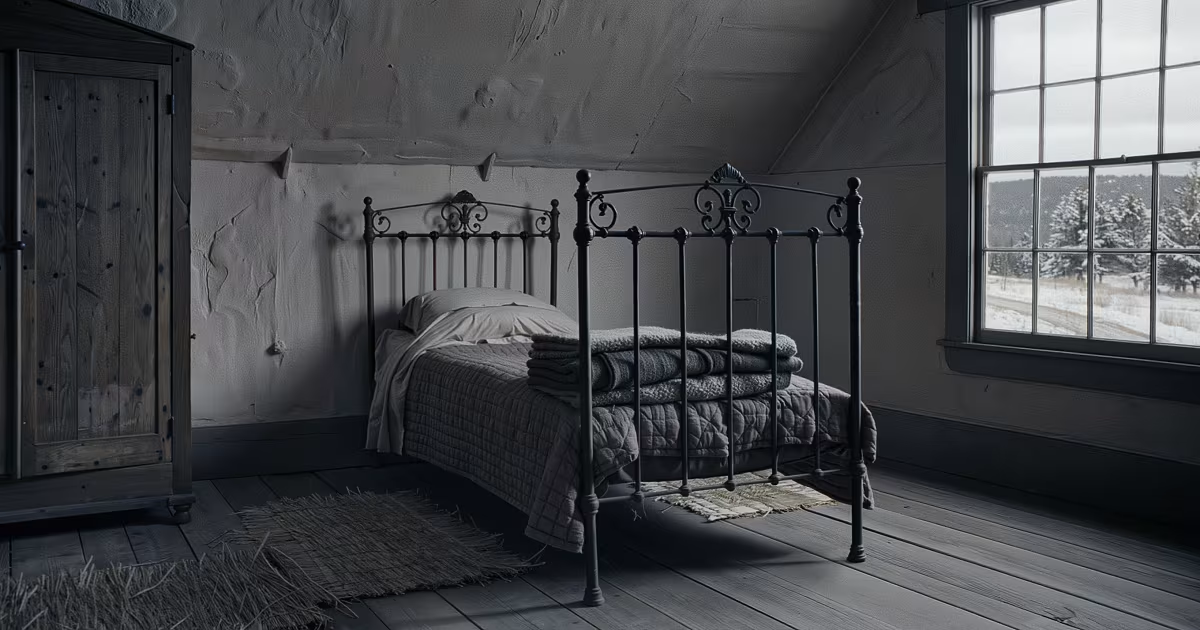
Amherst, Nova Scotia, 1878-79. Plaster over the bed: Esther Cox, you are mine to kill. Hubbell boarded. A barn. Quiet after.
064°12'00 W
1. Public Record
Amherst, Nova Scotia, late August 1878. Esther Cox, eighteen, living in the Teed cottage on Princess Street with her sister Olive, Olive's husband Daniel, their children, and other kin. After an attempted assault at gunpoint by a man named Bob MacNeil, the house changed. Bedclothes moved. Raps. Esther swelled, in the telling, and wrote in pain. On the plaster above her bed: Esther Cox, you are mine to kill. Dr. Carritte came, gave sedatives, and watched more objects move. The voice that knocked called itself Bob Nickle, a dead shoemaker, and would, Daniel said, run through the sounds of making a shoe.
Papers across the continent picked it up. Walter Hubbell, an American actor who had meant to expose it, boarded in March 1879 and left a book, The Great Amherst Mystery. Esther was taken on a short, unhappy tour. In November 1879 she was jailed four months for a barn fire at a house where she was staying, and released after one month under public pressure. The phenomena stopped. She later married and left the town's front page.
Esther Cox, you are mine to kill.
2. Date of Incident
Late August 1878 to November 1879. Hubbell in the house March 1879. Barn sentence that November.
3. Location
Teed house, Princess Street, Amherst, Nova Scotia. Approximate 45°50 N 064°12 W.
4. Official Narrative
Local doctors and neighbours treated it as a disturbance. Official narrative ends in a barn and a short sentence. No court named a ghost.
5. Witness Layer
The Teeds. Esther. Dr. Carritte. Hubbell as boarder and author. Townspeople who stood in the rooms.
A very rough and brutal-looking ghost, about sixty, a scraggy grey beard, dressed like a dirty tramp.
He would go through all the sounds of making a shoe.
6. Recovery Logistics
Plaster words. Hubbell's book. A barn that burned. No body of Nickle.
7. Assessment
A cottage-girl file that starts with a gun and ends with a barn. Keep the assault in the first paragraph. Keep the plaster sentence. Hubbell came to break it and stayed to sell it. That turn is part of the paper. A jail month is not proof of a shoemaker. It is proof the town wanted her out of other people's outbuildings.
8. Materials & Remains
Hubbell 1879/80. Newspaper copy. The cottage site. No plaster panel in a museum drawer.
9. Key Personnel
Esther Cox : The focus.
Daniel and Olive Teed : The house.
Dr. Carritte : First medical witness.
Walter Hubbell : The book.
10. Aftermath
Amherst kept the mystery as a festival later. Esther lived. The knocking did not follow her marriage in any paper that lasted.
11. Current Archive Status
Status: Teed cottage, Amherst, 1878-79. Plaster sentence. Short tour. Barn fire. Quiet after.
Confidence: High that the town spoke of disturbances around Esther that year. High that Hubbell boarded and published. Low that Bob Nickle was a man who made shoes. Low that the barn closes the plaster.
Filing note
An eighteen-year-old after a gun, a shared bed, raps, a swelling, a sentence over the pillow, a doctor with drops, an actor who came to laugh, a barn, a month in jail. The shoemaker never clocked in.
Esther Cox, you are mine to kill. Not a memoir flourish. Six words the household said were in the wall before the book existed.