BARBADOS COFFINS
Christ Church, Oistins. Between 1812 and 1820 the sealed Chase Vault is opened for family burials and the lead coffins are found thrown about. Lord Combermere attends. In 1820 the vault is emptied and left.
059°32'00 W
1. Public Record
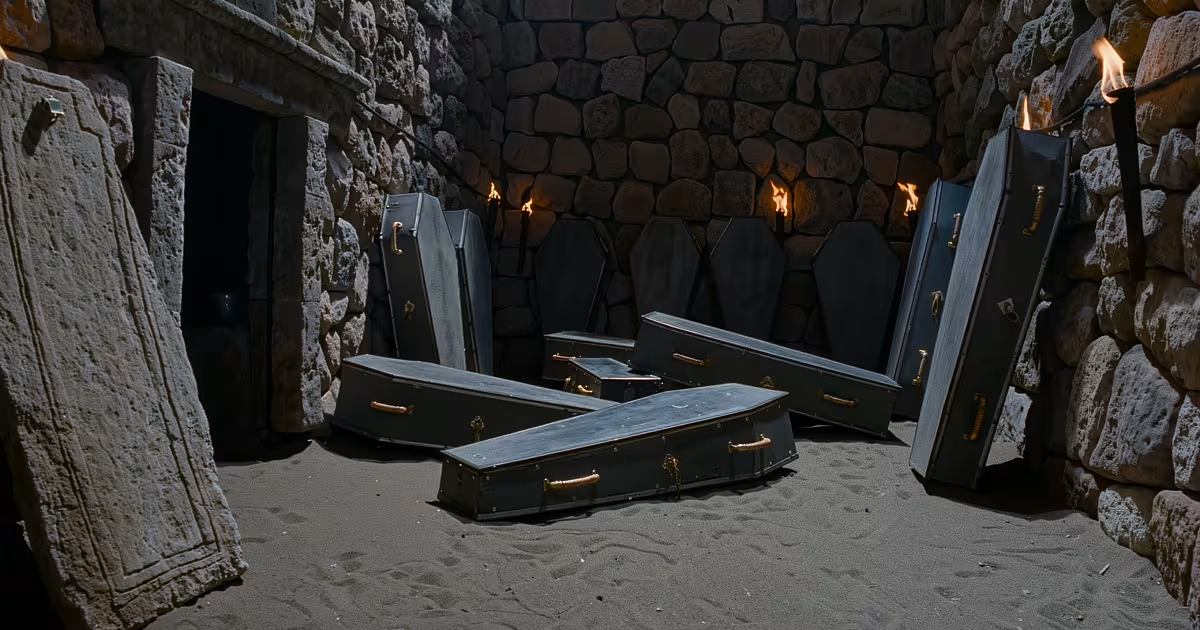
Christ Church Parish Church, Oistins, Barbados. A coral-stone vault at the edge of the churchyard, later called the Chase Vault. Between 1807 and 1820 it was opened for a short run of family burials. Each time the masons broke the seal, the heavy lead coffins inside were found thrown out of place. The wooden coffin of Mrs Thomasina Goddard, first in, tended to stay put as it rotted. The lead did not.
Sequence as usually given: Goddard 1807; infant Mary Ann Maria Chase 1808; Dorcas Chase, twelve, July 1812; their father, the Honourable Thomas Chase, August 1812 - already the children’s lead coffins were head-down or shifted. Infant Ames 1816. Samuel Brewster, killed in the 1816 rising, moved in that November. Thomasina Clark 1819. Governor Lord Combermere attended the later openings, had the sanded floor checked for feet, and still found the leads “confusedly thrown about, some with their heads down and others up.”
April 1820, no new burial: opened again on Combermere’s order. Same disorder. The vault was emptied and abandoned. The bodies went into ordinary ground.
The coffins were found thrown confusedly about the vault, some with the heads down and others up. What could have occasioned this phenomenon?
2. Date of Incident
Disturbances noted 1812-1820. Final official opening 18 April 1820. The earliest published narratives arrive years later, which is the main scholarly problem with the file.
3. Location
Christ Church Parish Church churchyard, Oistins, south coast of Barbados. Approximate 13°04 N 059°32 W. The vault is still there, empty. Sea close enough that flood-and-float is always the first conventional offer.
4. Official Narrative
No colonial inquest that survives as a tidy docket. What exists are later statements attributed to Rector T. H. Orderson, to Combermere’s circle, and to nineteenth-century historians repeating one another. Combermere’s presence is the closest thing to an official stamp. Flood, earthquake, and gas have all been proposed. None of them were written down as a finding in 1820.
5. Witness Layer
Workmen who needed six or seven men to move the slab. Clergy. A governor. The detail that keeps the story from being only a campfire: the largest lead, Thomas Chase’s, was described as set on end against the wall - a box that should have taken a team to lift. Sand on the floor, no footprints, mortar apparently sound.
How much of that sentence is 1820 and how much is 1860 is the live argument. Sir J. E. Alexander’s 1833 version is early enough to matter and late enough to have already smoothed the edges.
The door (a massive stone which required six or seven men to move) was cemented by masons; and though the floor was of sand there were no marks of footsteps or water.
In no other vault in the island has this ever occurred.
6. Recovery Logistics
Coffins restacked after each funeral, slab mortared, sometimes sealed in the governor’s presence. 1820: remaining bodies removed. Vault left empty. No instruments. No surviving official plan of the interior beyond later diagrams of where the boxes sat on two dates.
7. Assessment
Either a genuine repeated displacement of very heavy objects inside a sealed room, or a legend that accreted around a damp coastal vault and a hated planter. Thomas Chase’s reputation for cruelty is often imported to give the story a moral. It may be true and still irrelevant to lead boxes.
Flood-float is the least supernatural reading and struggles with a sand floor described as dry and unmarked. Fraud by workmen is possible and also a lot of work for no obvious purse. Leave it open.
8. Materials & Remains
The empty vault. Later diagrams of coffin positions on 7 July 1819 and 18 April 1820. No 1820 photograph. The leads themselves were reburied and are not a public exhibit.
9. Key Personnel
Hon. Thomas Chase - Planter. Buried August 1812. The heavy coffin.
Rev. T. H. Orderson - Rector. Name on later certificates.
Lord Combermere - Governor. Present at the late openings.
Mrs Goddard, the Chase daughters, Brewster, Clark - The other occupants.
10. Aftermath
The vault became a tourist sentence. It is still pointed at. Nothing has moved in it for two centuries because nothing is left to move. That is the quietest ending a haunted box can have.
11. Current Archive Status
Status: Sealed-vault displacement legend with named official witnesses. Primary 1820 docket thin.
Confidence: High that the vault was opened multiple times 1808-1820 and then emptied. Moderate that contemporaries reported the leads out of place. Low that the surviving narratives are uncontaminated minutes of each opening. Low that a mechanism has been demonstrated.
Filing note
Lead coffins thrown about inside a coral vault, sanded floor with no footprints, Lord Combermere present for the last opening, the vault abandoned in 1820. Gothic retellings add a bony arm through cracked lead. Different grade. Leave the arm off the page.
The vault was emptied and left. Not a haunting that was endured. A family that decided the boxes were no longer worth the stone. An empty room by the sea is all that is left to inspect. The story is heavier than the coffins now, and that decision makes the sanded floor colder.