CHILLINGHAM
Chillingham Castle, Northumberland. Edward I lodges 1298. Pink Room talk. 1920s works cut a passage: small bones and a scrap of blue fabric. Churchyard takes them. Flash later. Bones in the wall.
001°54'00 W
1. Public Record
Chillingham Castle, Northumberland. A Border keep that has taken English and Scottish weather for centuries. Edward I lodges here in 1298 on the way to Falkirk. James VI of Scotland is entertained in a hall built over the undercroft for that kind of visit. Wild white cattle still run in the park. The Great Hall keeps antlers and armour. That is the house the guidebook can prove.
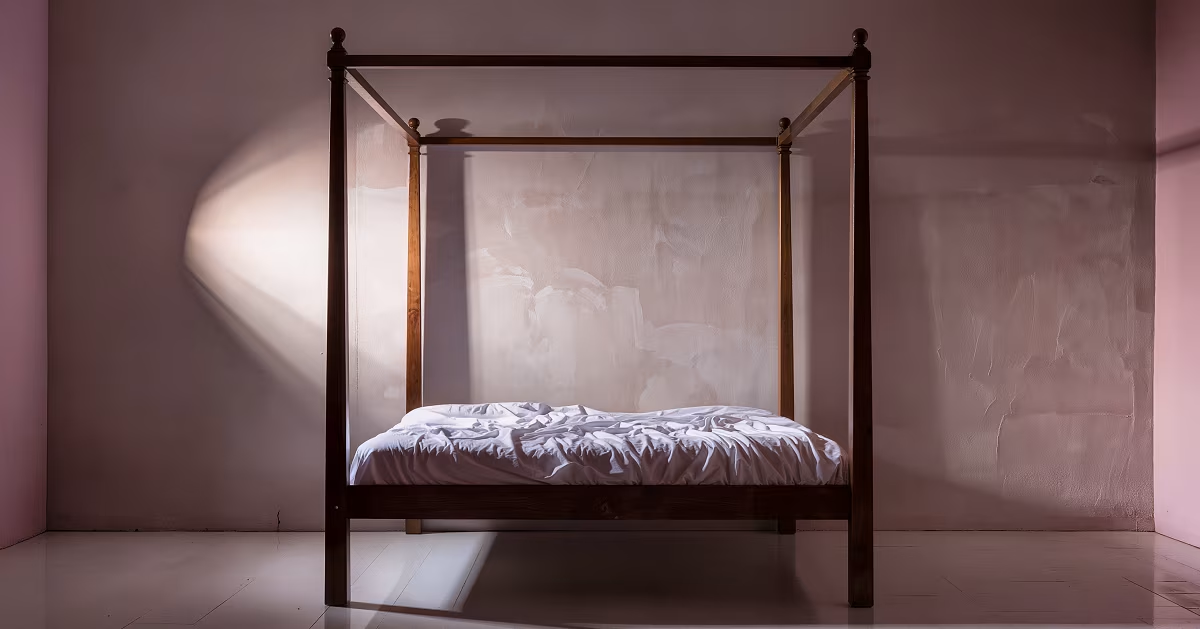
The Pink Room is the room the night trade wants. Talk gives a Blue Boy, sometimes a Radiant Boy: midnight, a child in pain behind the plaster, a light forming near the bed, a small figure in blue clothes that witnesses put in the 1660s. In the 1920s workmen cutting a passage into the tower rooms find the bones of a young boy in the wall, with scraps of blue cloth. The remains go to the churchyard. The cries, the story says, stop. Some later guests still report a blue flash from that wall. Sir Humphrey Wakefield, who took the ruin on and made it a ticket, likes to note that no wiring runs through that masonry.
A keep. A pink room. Bones the workmen did not expect.
The noises always came from the wall.
2. Date of Incident
Castle medieval onward. Edward I 1298. Blue Boy talk into the twentieth century. Bones in the 1920s works. Present tours under the Wakefield restoration.
3. Location
Chillingham, Northumberland. Approximate 55°32 N 001°54 W.
4. Official Narrative
A restored castle and park with wild cattle. Official narrative is masonry, royalty, and a ticket. It will tell the Blue Boy. It will not call the 1920s bones a closed inquest.
5. Witness Layer
Overnight guests in the Pink Room. 1920s workmen. Later visitors who saw a flash. The family and staff who sell the night.
Workmen unearthed the bones of a young boy in the wall. Fragments of blue fabric lay beside the skeleton.
No wiring runs through that part of the wall.
6. Recovery Logistics
Bones removed to the church. Cloth scraps with them. No named child in the parish register that this cabinet can match.
7. Assessment
Keep Edward I and the white cattle so the keep has paper before it has a boy. Keep the 1920s opening as the only physical claim: bones and blue cloth in a wall. Do not write those bones as a named murder. Do not write the flash as a circuit fault just because that is the tidy sentence, or as a ghost just because the ticket prefers it. The cries stopping after the burial is the detail the house uses. It is also the detail that cannot be checked.
8. Materials & Remains
The castle. Pink Room. 1920s bones, now buried. Wild cattle in the park.
9. Key Personnel
Edward I / James VI : Documented stays.
1920s workmen : The wall.
Wakefield restoration : Present keepers.
10. Aftermath
The keep is a night business. The boy in blue is the name that books the Pink Room. The cattle do not care.
11. Current Archive Status
Status: Northumberland keep. Pink Room. Bones in the 1920s. Flash later.
Confidence: High that workmen found a child skeleton and blue cloth in that wall. Low that the child is identified. Low that later flashes are the same event.
Filing note
A Border keep, a royal bed, a pink room, cries in the plaster, a passage cut in the 1920s, small bones and a scrap of blue, a churchyard that took them, a flash that staff say cannot be the wiring.
Fragments of blue fabric. That is the whole wardrobe the wall gave back.