BORLEY RECTORY
Essex rectory Price named the most haunted house in England. Nun, bells, wall writing. Foyster years of thrown crockery. Price privately called those nights fraud. The house burned 27 February 1939 and came down in 1944.
000°42'00 E
1. Public Record
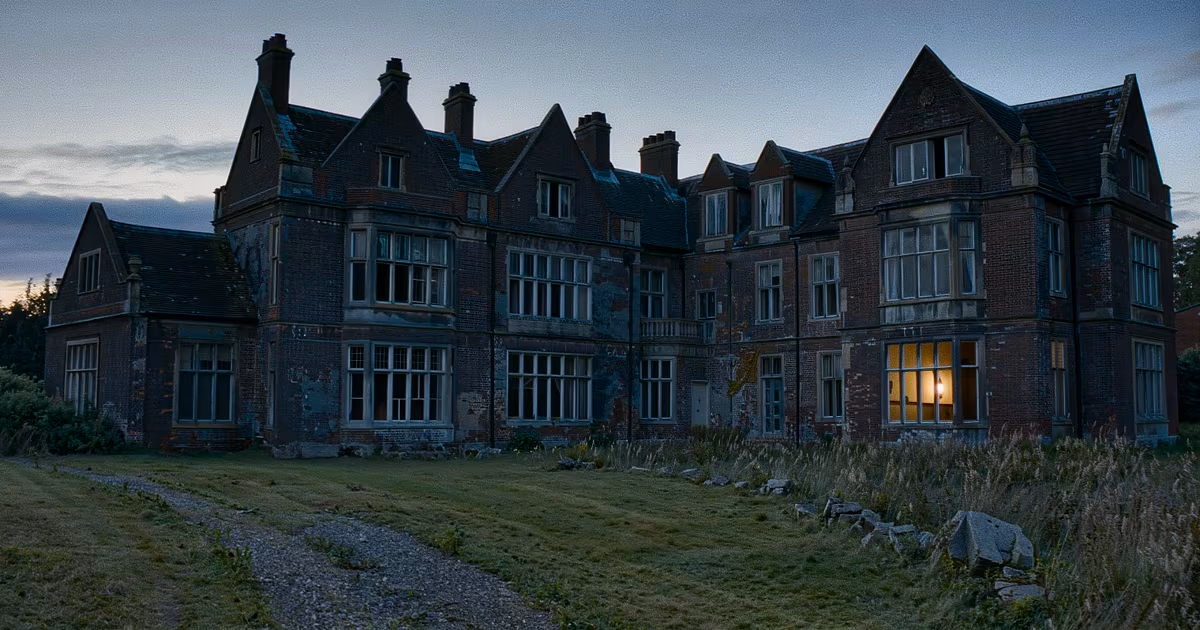
Borley Rectory, Essex, built 1862 for the Reverend Henry Bull, demolished after fire in 1944. Thirty-two rooms, no mains electricity, water from a courtyard well. Harry Price called it the most haunted house in England and then spent the rest of his career defending the sentence.
The inventory is a Victorian rector’s nightmare: a nun on the lawn, a coach, bells that rang with no wires pulled, stones, whispers, wall-writing that said Marianne please help get out, and, during the Foyster incumbency of 1930-35, a run of thrown objects and small fires that Price himself, after two nights in 1931, quietly told a colleague looked fraudulent once the household was controlled.
Captain W. H. Gregson bought the empty house. On the night of 27-28 February 1939 a stack of books went into an oil lamp in the hall. The rectory burned. Insurance thought the fire looked deliberate. Onlookers later sold Price stories of figures in the upper windows. He paid at least one of them a guinea.
Marianne, please help me get out.
2. Date of Incident
Haunt claims from the Bull occupancy onward. Price’s first press visit 1929. Foyster peak 1930-32. Price’s year of observers 1937-38. Fire 27 February 1939. Demolition 1944. A 1938 séance produced a spirit, Sunex Amures, who promised a fire on 27 March 1938. The real fire missed that date by eleven months.
3. Location
Borley, on the Essex-Suffolk border, near the River Stour. Approximate 52°03 N 000°42 E. The house is gone. The church remains. The lawn where the nun walked is just a lawn.
4. Official Narrative
Church and police produced no finding that a ghost lived there. Price produced two books. After his death, Dingwall, Goldney and Hall went through the papers and took the case apart: sloppy notes, willing witnesses, a house that performed best when the right people were in it. That SPR critique is now part of the official stack whether believers like it or not.
5. Witness Layer
The Bull daughters and their nun on the path. Lionel and Marianne Foyster, and the adopted child Adelaide, living inside the noisiest years. Price’s volunteer observers with their notebooks and their desire to see something. Marianne is the hinge. Handwriting on the walls has been compared to hers. Price, in private, was capable of saying the Foyster phenomena stopped when the rooms were controlled. In public he sold the house as unique.
It is the most amazing case, but amazing only in so far that we are convinced that the many phenomena we saw were fraudulent because we took steps to control various persons and rooms, [and] the manifestations ceased.
The fire was caused through a big pile of books… falling over on to a lamp and upsetting it.
6. Recovery Logistics
Price dug the cellar in 1943 and lifted two bones he thought were a young woman’s. That is not a nun with a chain of custody. The house came down. Objects Price collected went into his own archive, which is not the same as an independent lock-up.
7. Assessment
A genuine run of odd reports in a gloomy rectory, inflated by a professional publicist into the national haunting. Both can be true at once. The 1931 private letter is the document Price’s admirers skip. It does not prove every Bull-era sighting was a trick. It does prove Price knew how the Foyster house behaved under control.
Borley is a lesson about investigators as well as about houses.
8. Materials & Remains
Photographs of the standing house and of the burn. Wall-writing pictures. Price’s books. Two bones of disputed origin. No rectory.
9. Key Personnel
Rev. Henry Bull and family - First long occupancy. Nun on the lawn.
Rev. Lionel and Marianne Foyster - Noisiest years.
Harry Price - Named it. Rented it. Sold it.
Captain W. H. Gregson - Owner at the fire.
Dingwall, Goldney, Hall - The later audit.
10. Aftermath
The phrase outlived the bricks. Every later English haunting is still measured against a house that is not there. That is Price’s real monument.
11. Current Archive Status
Status: Best-known English haunting. House gone. Investigator’s private doubts on record.
Confidence: High that occupants reported phenomena across several decades. High that Price exaggerated and that some Foyster events do not survive scrutiny. Low that a single named spirit has been demonstrated. Low that the 1939 fire was the fulfilment of a séance timetable.
Filing note
A tall Essex rectory, a nun on a lawn, bells, wall writing, the Foyster years of thrown crockery, Price privately calling those nights fraud, the house burning in 1939 and coming down in 1944. Keep the 1931 letter next to the book jacket. They are the same man.
The well in the courtyard was always just a well. The most haunted house in England is now a phrase. Under the phrase is a brick hole that held water. That small ordinary fact makes the demolished rooms colder than the jacket copy Price sold while he still had doubts in the drawer.