THYLACINE
Tasmania. Official paper stamps the striped marsupial wolf gone when Benjamin dies in Hobart Zoo on 7 September 1936. Bounties already did the arithmetic. Sightings after do not stop. Wet-road file open.
147°19'00 E
1. Public Record
Thylacine. Tasmania. A striped marsupial wolf that official paper declared gone when Benjamin died in Hobart Zoo on 7 September 1936. The last wild kill on the books is earlier. Bounties had already done the arithmetic. Film of Benjamin pacing a small run is the image the world kept. After 1936 the sightings do not stop. Bushmen, drivers, and later camera-trap hopefuls keep a thin live file that zoology will not stamp.
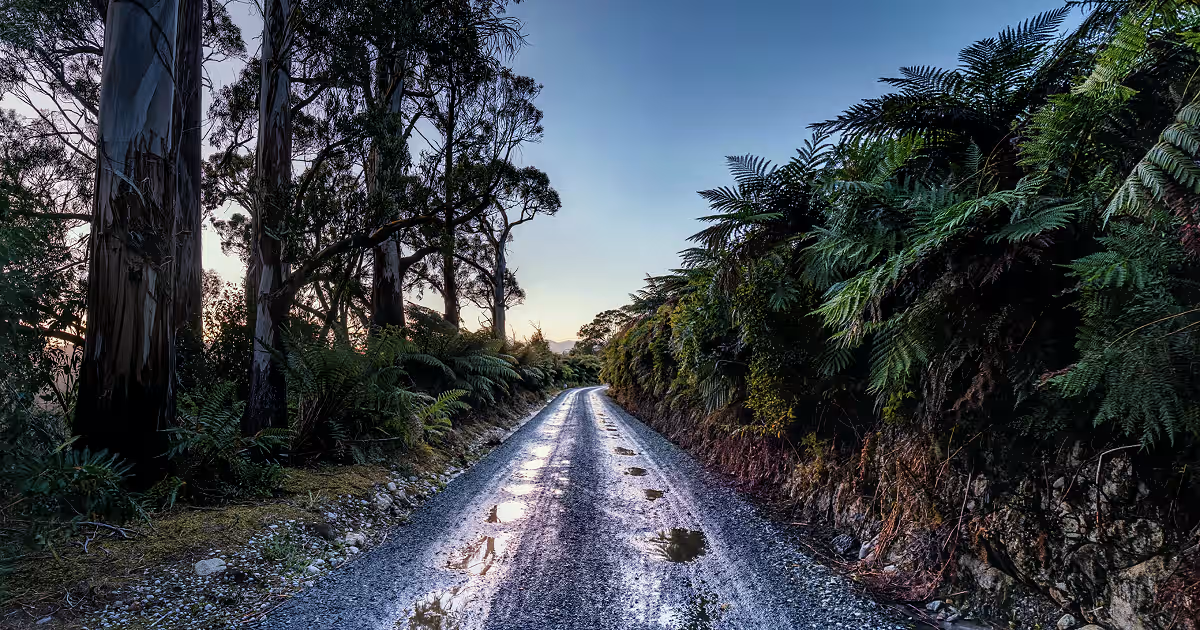
Parks and wildlife treat the animal as extinct and still take reports because the public will not. Hair, photos, and video arrive and fail the test, or fail to arrive at a lab that wants them. Mainland rumours are cheaper than Tasmanian ones. The island is the only geography this page will treat as serious. A thylacine on a wet road at dusk is the sentence that will not retire.
A zoo run in 1936. A bounty ledger before that. A wet road after.
2. Date of Incident
Extinction stamp 1936. Bounty years before. Sighting file after, unfinished.
3. Location
Tasmania, with Hobart Zoo as the last captive pin. Approximate 42°53 S 147°19 E for the zoo. Bush reports island-wide.
4. Official Narrative
Extinct. Official narrative is 1936 plus habitat loss and bounty. Reports are logged as reports.
5. Witness Layer
Zoo staff of 1936. Bush witnesses after. Camera-trap operators. Parks officers who have to take the call.
6. Recovery Logistics
Benjamin's film. Skins in museums from the bounty years. No accepted post-1936 body.
7. Assessment
Extinct is a paper word that can be right and still leave a road. The bounty years are the crime before the zoo. Camera-trap culture is a hope industry. Most frames will be dogs. That does not make every dusk a dog.
This folder files the thylacine as officially dead and unofficially unfinished. Keep Benjamin as the last animal the state will sign. Keep the wet-road sentence as the reason the page exists after 1936. Do not move the species to the mainland to make a better story.
8. Materials & Remains
1936 film. Museum skins. Unverified later images. No accepted new body.
9. Key Personnel
Benjamin : Last captive on the stamp.
Parks and bush witnesses : The after-file.
10. Aftermath
The stripe becomes a Tasmanian brand. Science keeps the extinct stamp. The road keeps the rumour.
11. Current Archive Status
Status: 1936 stamp. Wet-road file open.
Confidence: High that the species was real and that Benjamin died in 1936. Low that any later frame is a type specimen. Low that official extinction is disproved.
Filing note
An island, a bounty book, a zoo run, a small animal pacing for a camera, a stamp that said gone, decades of dusk roads that would not take the stamp as the last word.
7 September 1936. The last date the state was willing to write.