PATTERSON-GIMLIN
20 October 1967. Bluff Creek. Fifty-three seconds of 16mm. 952 frames. Gimlin had a rifle and did not shoot. No specimen.
123°42'00 W
1. Public Record
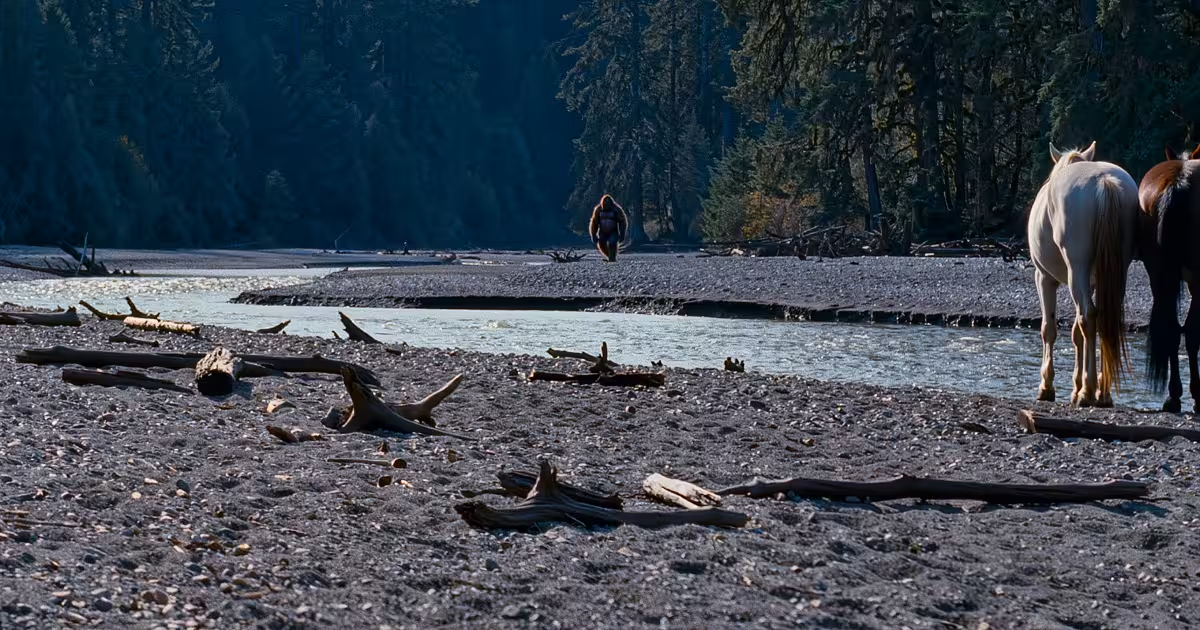
20 October 1967, early afternoon. Bluff Creek, Six Rivers National Forest, northern California. Roger Patterson and Bob Gimlin were on horseback looking for tracks. A large dark upright figure crossed the creek bed about eighty feet off. Patterson’s horse shied. He got the rented 16mm camera to his shoulder and ran. About fifty-three seconds. Nine hundred and fifty-two frames. The figure turned once at frame 352, the frame everyone reprints, then went into the timber. Gimlin stayed mounted with the rifle and did not shoot.
They made casts of the prints. They drove the film to Yakima. The footage has been measured, walked, costumed, and sworn at for six decades. Patterson died in 1972 still saying it was not a man in a suit. Gimlin is still saying the same thing.
I knew we had something. I didn’t know what.
2. Date of Incident
20 October 1967, about 13:30. Film processed within days. Patterson-Gimlin film is the object. The date does not move.
3. Location
Bluff Creek, Humboldt County, California. Approximate 41°23 N 123°42 W. A logging road and a creek bed that has been walked to death since.
4. Official Narrative
No federal finding that names a species. The Forest Service did not open a hunt. Official narrative is absence. The film is a private object that became a public argument.
5. Witness Layer
Two men. One camera. One rifle that stayed in the scabbard. Patterson’s sister and others who saw the raw reel early. Costume claims (Philip Morris, later Bob Heironimus) arrived years after and do not all fit the same suit. Gimlin has not joined the costume story.
I didn’t shoot because I didn’t know what I was shooting at.
Look at the muscle. Look at the way it walks.
6. Recovery Logistics
952 frames of 16mm. Plaster tracks. No body. No hair sample that closed a lab. The camera was rented. That fact is not a scandal. It is why the reel exists.
7. Assessment
The American cryptid film. That is the shelf. A hoax would only have to be a good suit on a good afternoon. A real animal would only have to walk across a creek once. Fifty-three seconds cannot decide that. What the file does have is a man who could have fired and did not, and a second man who outlived the first and did not change the sentence. Keep frame 352. Do not let it become the whole creek.
8. Materials & Remains
The film. The casts. No specimen.
9. Key Personnel
Roger Patterson : Camera. Died 1972.
Bob Gimlin : Rifle. Still the other witness.
Al DeAtley : Early processing help.
10. Aftermath
Every later bigfoot video is measured against 952 frames. Bluff Creek is a waypoint. Gimlin still does the quiet interviews.
11. Current Archive Status
Status: 16mm film, Bluff Creek, 20 October 1967. 952 frames. No specimen. Both named witnesses unrecanted.
Confidence: High that Patterson shot that reel on that afternoon and that Gimlin was present. High that the figure is not a known bear gait. Low that costume claims have been proved to a standard that retires the film. Low that a body will now be produced from that timber.
Filing note
Two men on horses, a creek, a rented camera, a figure that turns once. One of them had a rifle and did not use it. The other died five years later still pointing at the muscle in his own footage. The casts are in boxes. The animal is not.
Gimlin did not shoot. A man who had come prepared to take an animal and decided, in the seconds he had, that he did not know what he was aiming at. That small refusal makes the turn at frame 352 colder than any later man in a suit.