MINHOCÃO
Southern Brazilian highlands. Saint-Hilaire 1846: a lake thing that pulls horses under. Fritz Muller in Nature, 1878: minhocao, great earthworm. An 1849 dead-skin claim. No specimen on a tray.
049°40'00 W
1. Public Record
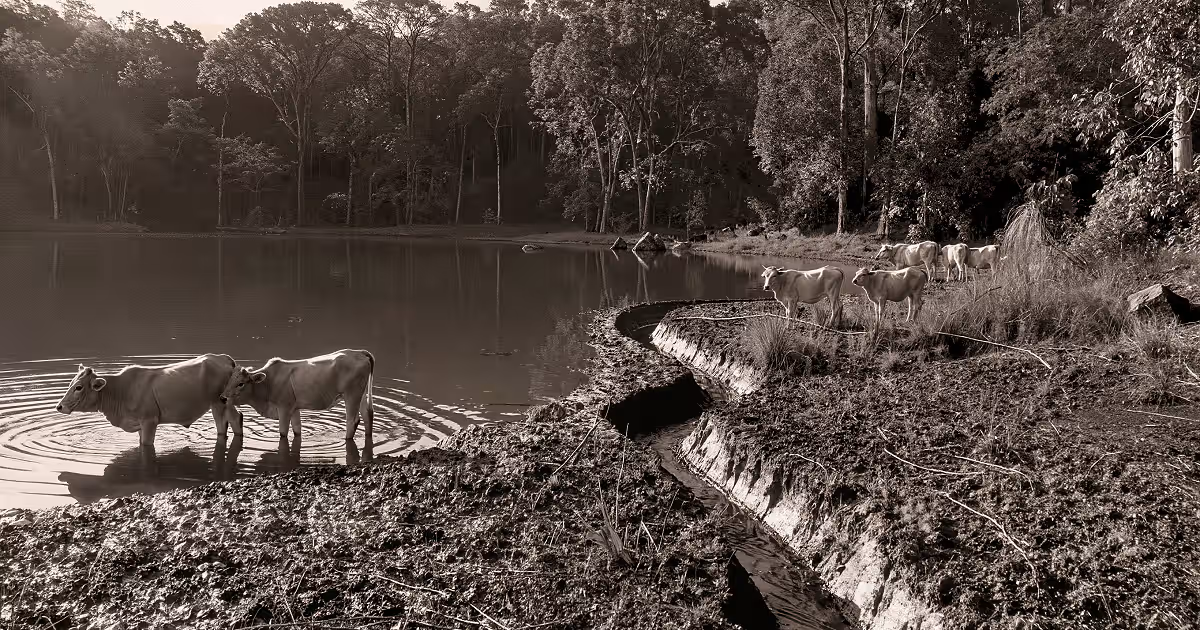
Southern Brazilian highlands. Nineteenth century. Locals tell Augustin Saint-Hilaire, December 1846, of a thing in Padre Aranda and Feia lakes that pulls horses and cattle under. Minhocão: the great earthworm, minhoca grown huge. Saint-Hilaire wonders about a giant lungfish. In 1878 Fritz Müller writes from Itajaí to Zoologische Garten. Nature reprints him that February. Senhor Lebino of Curitibanos: a worm fifty yards by five, armoured with bone, pine trees lifted like grass, streams turned, dry ground made morass. Other mouths give thirty or forty feet and two yards broad. An 1849 dead thing: skin like pine bark, scales like an armadillo. Horns in an earlier telling. Müller smiles, then says after the accounts one can hardly refuse some such animal, if not the country size.
No type specimen reaches a capital museum. Trench claims remain trenches. The name stays folklore and a Nature paragraph.
A lake story. A German letter. A smile that did not quite kill the worm.
Uprooting mighty pine trees as if they were blades of grass.
2. Date of Incident
Saint-Hilaire 1846. Dead-skin claim 1849. Müller / Nature 1878. Folk talk earlier and later.
3. Location
Southern Brazilian highlands and lakes. Approximate 27°10 S 049°40 W.
4. Official Narrative
Naturalists record testimony. Official narrative is unverified large animal, lungfish suggested, no skin on a hook.
5. Witness Layer
Highland farmers. Lebino. Saint-Hilaire as listener. Müller as the man who put it in a journal.
Often drawn horses and horned cattle under the water.
One can hardly refuse to believe that some such animal does really exist, although not quite so large as the country folk would have us believe.
6. Recovery Logistics
An 1849 carcass claim. No museum skin. Trenches without a body.
7. Assessment
A trench-and-letter file. Keep 1846 before 1878. Keep Müller's smile and his refusal to dismiss. Armour and horns are the parts that want a known vertebrate. Do not write fifty yards as a measurement. Do not write the Nature page as a type description.
8. Materials & Remains
Saint-Hilaire. Nature 1878. Folk trenches. No specimen.
9. Key Personnel
Augustin Saint-Hilaire : 1846 listener.
Fritz Müller : The letter.
Senhor Lebino : Curitibanos voice.
10. Aftermath
Cryptozoology keeps the name. Zoology keeps the lungfish maybe. The highlands keep holes that water fills.
11. Current Archive Status
Status: 1846 lakes. 1878 Nature. No specimen. Trenches remain talk.
Confidence: High that nineteenth-century naturalists wrote down a giant-worm tradition with cattle losses. Low that a fifty-yard armoured worm existed. Low that the 1849 skin was kept.
Filing note
A Frenchman at a lake in 1846, horses going under, a German in 1878 who smiled and then would not quite laugh, pine trees spoken of as grass, a Nature page, a carcass with pine-bark skin that never reached a tray.
Not quite so large as the country folk would have us believe. The only measurement in the file that sounds like a scientist. Even that still leaves a worm.