BLACK SHUCK
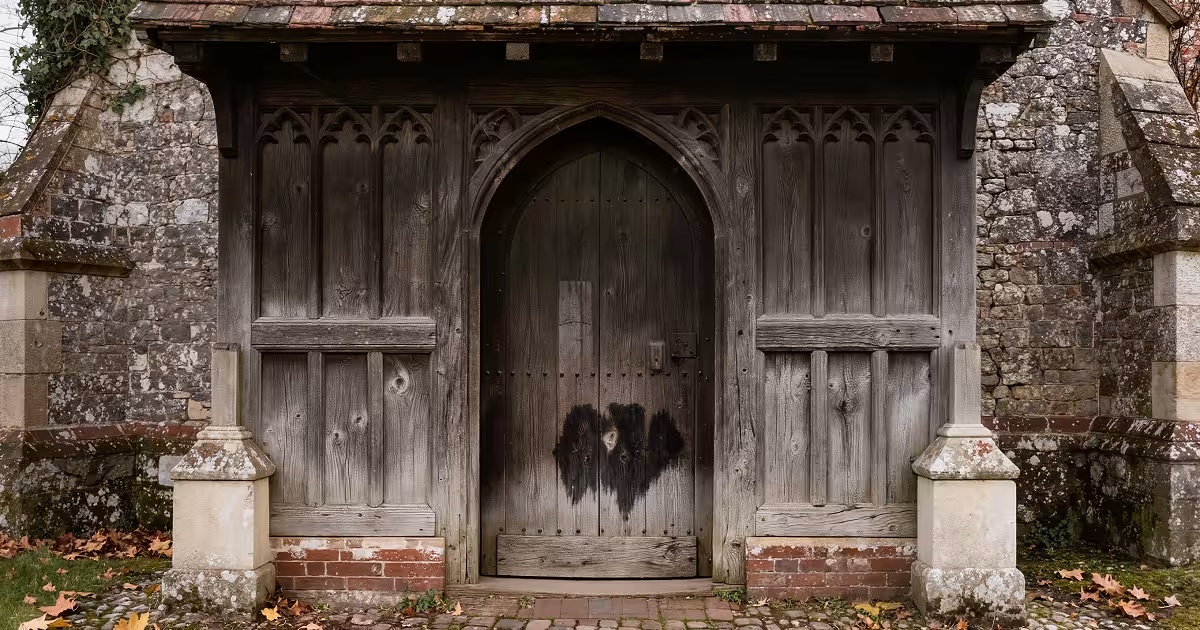
4 August 1577. Bungay and Blythburgh, Suffolk. A storm, a black dog through two congregations. Scorch marks on Blythburgh's door. Fleming prints a pamphlet that year. Door is the object. Hound untyped.
001°36'00 E
1. Public Record
Black Shuck. East Anglia. A black dog, often one-eyed, that walks roads, churchyards, and the edges of storms. The date the churches keep is 4 August 1577. Bungay and Blythburgh. A storm. A beast that runs through the congregation. Scorch marks on Blythburgh's door that guides still point at. Abraham Fleming prints a pamphlet that same year. The pamphlet is theology and weather and a dog. Later Norfolk and Suffolk keep the name on lanes that never needed a pamphlet.
Barguest and Padfoot are northern cousins on other roads. This page is the Anglian dog. Do not invent a breeding line across the Pennines. A church door with a mark is a real object. A one-eyed hound in a storm is the story hung on it.
Fleming's pamphlet wants providence and terror in the same weather. Lightning does both. So does a dog if you need a sinner in the aisle. Blythburgh's door is what a finger can still find. Bungay keeps the other half of the Sunday. Lanes after 1577 reuse the name the way lanes reuse every black dog in England.
One eye is the later postcard. Fleming is busier than an eye count. He wants a beast that can walk a nave. The door mark is quieter and still here. Point at wood before you point at an orbit.
A storm Sunday. Two churches. A door that still takes the finger.
4 August 1577. Bungay and Blythburgh. A storm. A beast that runs through the congregation.
Two towns, one Sunday, one pamphlet. That is already a file. Lightning does church work in 1577 as well as dogs do. File both authors. Let the door be a door.
2. Date of Incident
4 August 1577 as the printed Sunday. Lane sightings ongoing as folklore.
3. Location
Bungay and Blythburgh, Suffolk, and wider East Anglia. Blythburgh approximate 52°19 N 001°36 E.
4. Official Narrative
Parish memory and a 1577 pamphlet. Official narrative is storm and church. The dog is interpretation.
5. Witness Layer
Congregations as Fleming tells them. Later lane witnesses. Church guides who point at the door.
Scorch marks on Blythburgh's door that guides still point at.
A mark on wood is the only hardware. It can be storm. It can be a later finger needing a hole. It cannot be made to bark.
Barguest and Padfoot are northern cousins on other roads. This page is the Anglian dog.
Names travel. Dogs do not have to. Keep Shuck in the east. Leave the north its own hounds.
6. Recovery Logistics
Pamphlet. Church door. No hide.
7. Assessment
Start with the Sunday and the pamphlet. A storm that hit two churches is history. A dog inside it is the theology Fleming needed. Lane stories after that are weather the region kept. Do not type a species. Do type a door.
This folder files Black Shuck as an East Anglian church-and-lane name with a 1577 spine. Keep the door. Leave the eye in the sermon.
8. Materials & Remains
Fleming 1577. Blythburgh door. No specimen.
9. Key Personnel
Abraham Fleming : The pamphlet.
Bungay and Blythburgh congregations : The Sunday.
10. Aftermath
Guides keep pointing. Lanes keep the name. The door keeps a mark that may only be weather and a finger.
11. Current Archive Status
Status: 4 Aug 1577. Two churches. Door marked.
Confidence: High that a storm hit those churches that Sunday and that Fleming printed a dog. Low that a hound is typed. Low that the door mark is a paw.
Filing note
An East Anglian Sunday, two congregations in a storm, a pamphlet that needed a beast, a church door that still takes a finger, lanes that kept the name without another pamphlet.
The door is the object. The eye is the sermon.