VORONEZH
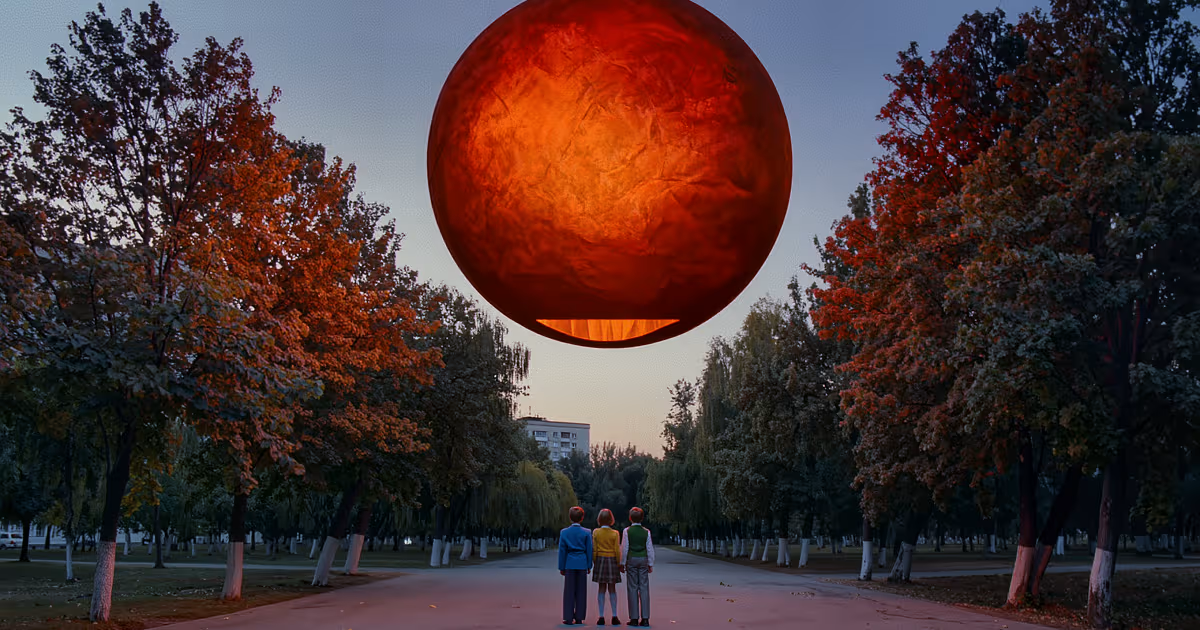
Voronezh, late September 1989. TASS correspondent Vladimir Lebedev puts a park landing on the wire from child interviews: red ball, tall thin figure. He later says he saw none of it. Correspondent saw nothing.
039°13'00 E
1. Public Record
Voronezh, three hundred miles south of Moscow. Late September 1989. TASS correspondent Vladimir Lebedev, twenty years at the agency, puts a landing in a park on the wire. Pink shine, then a deep red ball about ten yards across, a hatch, a tall thin figure with three eyes, silver overalls, bronze boots, a disc on the chest, a robot, a stare that stops a screaming boy. Children named in the copy: Vasya Surin, Zhenya Blinov, Yuliya Sholokhova, evening of the 27th, half past six. Lebedev later says he saw none of it. He spoke to about ten youngsters aged twelve and thirteen. No more were needed.
Residents tell Western reporters the next day that it happened. Genrikh Silanov of the local geophysical laboratory asks the children to draw. TASS, once dry, is in a season of sensation. Deputy editor Igor Efimov notes that among the two dozen claimed witnesses there are no scientists, no officials, no militia. Three landings are spoken of between the 23rd and the 29th. The park keeps its benches. No object is taken to a Soviet institute under a caption this archive trusts.
A wire story. A park. Drawings. An agency learning how to shout.
No more were needed.
2. Date of Incident
Claimed landings 23-29 September 1989, principal child's date 27 September 18:30. TASS 9-10 October 1989.
3. Location
Voronezh, Russian SFSR. Approximate 51°40 N 039°13 E.
4. Official Narrative
TASS ran it. That is not the same as the Academy signing it. Official narrative after the first day is distance: experts will look, the correspondent did not see it.
5. Witness Layer
The named children. Other park children. Lebedev. Silanov. Efimov. Neighbours who backed the wire to the New York Times.
They saw a pink shining in the sky and then spotted a ball of deep red colour.
Among the two dozen witnesses there were no scientists, no officials and no militiamen.
6. Recovery Logistics
Drawings. Wire copy. No artefact from the park.
7. Assessment
A wire-and-park file. Keep Lebedev's "no more were needed" so the method sits beside the three eyes. Glasnost made TASS loud. Loud is not the same as a landing. Do not write bronze boots as inventory. Do not write the children as liars because an adult put them on a global wire without walking the grass himself.
8. Materials & Remains
TASS items. Western follow-ups. Children's drawings as reported. The park.
9. Key Personnel
Vasya Surin / Zhenya Blinov / Yuliya Sholokhova : Named children.
Vladimir Lebedev : The wire.
Genrikh Silanov : Drawings.
Igor Efimov : The adult count.
10. Aftermath
Voronezh becomes a late-Soviet joke and a late-Soviet document at once. The benches do not remember. The drawings are what remains of the stare.
11. Current Archive Status
Status: TASS Sept 1989. Children first. Correspondent saw nothing. No artefact.
Confidence: High that TASS transmitted a park landing based on child interviews. Low that a nine-foot three-eyed figure stood on the grass. Low that later drawings recover a vehicle.
Filing note
A park at half past six, three names, a red ball, a stare, a twenty-year correspondent who did not go to the grass, ten children, a deputy editor counting the adults who were not there, drawings asked for after the wire had already left the country.
No more were needed. The most honest sentence an agency man put on that week.