BATTERSEA POLTERGEIST
63 Wycliffe Road, 27 January 1956. A key that fitted nothing. Chibbett. Police at the exorcism.
000°08'00 W
1. Public Record
63 Wycliffe Road, Battersea. 27 January 1956. A silver key appears on fifteen-year-old Shirley Hitchings's bed. Wally Hitchings, train driver, tries it in every lock in the house and leaves it in the kitchen. Morning, it is back on the bed. That night the house bangs loud enough that neighbours think of an air raid. Raps follow Shirley into the day and into work. She loses two weeks.
18 February, a dropped glove flies up and hits her father in the face. The family later describe her rigid, six inches off the mattress, before they lift her down. Raps settle into a crude alphabet and call themselves Donald, a boy Shirley had played with. Objects move. Fires start. Writing on walls. Letters arrive by the thousand, signed as if by the dead, through years that outlast most English poltergeist files. Harold Chibbett keeps the fullest notes. An attempted exorcism is broken up by police. Home Secretary Gwilym Lloyd George has to answer for the raid in the House.
Twelve years is the span later writers give it. Shirley and James Clark publish The Poltergeist Prince of London in 2013 from the box that sat in an attic. The terrace is gone. The key never fitted a lock anyone owned.
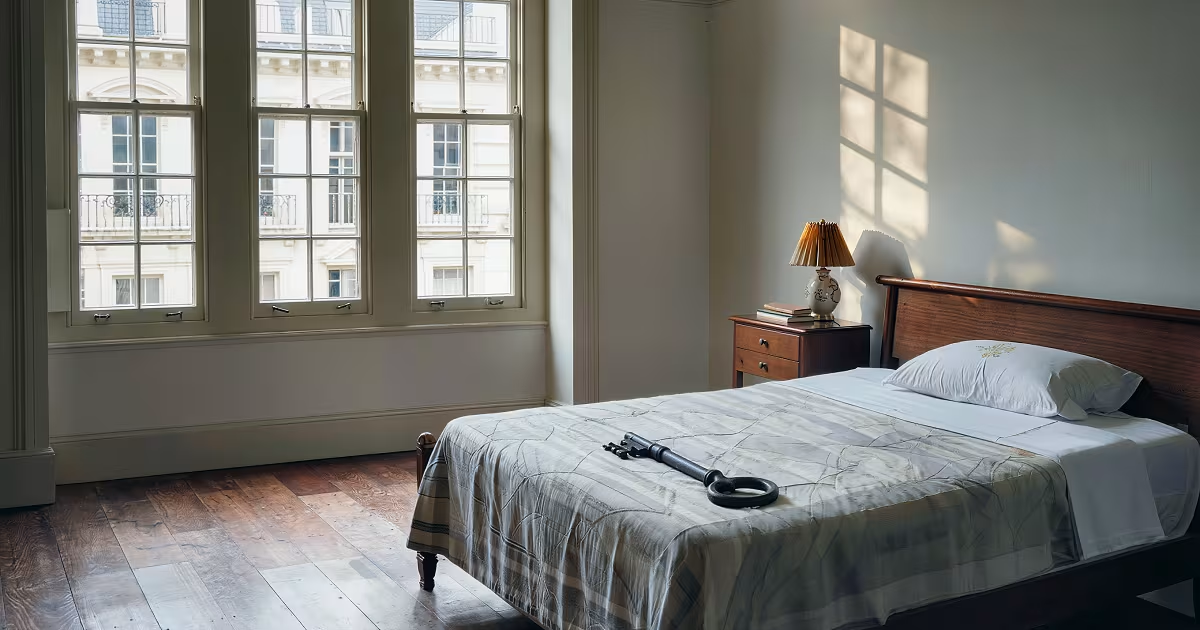
A mysterious old key appeared on the bed of 15-year-old Shirley Hitchings.
2. Date of Incident
Key and first raps late January 1956. Peak that spring. Disturbances claimed across years into the 1960s. Book 2013.
3. Location
Battersea, south London. Approximate 51°28 N 000°08 W.
4. Official Narrative
Police at an exorcism. A Home Secretary in the House. Official narrative is a domestic disturbance that became a press case. No spirit on a charge sheet.
5. Witness Layer
Shirley. Wally and Catherine. Ethel. The relative later called Mark. Chibbett. Neighbours who heard the raid-like night. Lloyd George as the man who had to speak.
She was rigid and about six inches above the bed when we lifted her out.
6. Recovery Logistics
The key. Chibbett's papers. A box of letters. No object that proved Donald.
7. Assessment
A key-and-letter file. Keep 27 January. Keep the lock tour, which is the rational first night. Twelve years is a claim that needs Chibbett more than it needs a television podcast. Do not write Shirley as only a medium because the raps learned an alphabet. Do not write the Home Secretary as a believer. He was answering for a police door.
8. Materials & Remains
Chibbett. The 2013 book. Press on the raid. The key as described, not as a museum piece.
9. Key Personnel
Shirley Hitchings : The centre.
Wally Hitchings : Every lock.
Harold Chibbett : The notes.
Gwilym Lloyd George : The House.
10. Aftermath
The case goes quiet, then returns as radio and a book. Wycliffe Road does not keep the house. Donald remains a name in a code.
11. Current Archive Status
Status: Key 27 Jan 1956. Chibbett notes. Police at the exorcism. Letters claimed for years.
Confidence: High that a key and loud raps were reported in that terrace in January 1956 and that police broke up a later service. Low that Donald is an independent agent. Low that every letter in the attic box has a clean chain.
Filing note
A silver key that fitted nothing, a kitchen overnight, a house that sounded like a raid, a glove in a father's face, six inches of air, a boy in the raps, a thousand letters, a Home Secretary on his feet because the police had gone through a door.
He tried it in every lock in the house. That is the first investigation, and it already failed before the alphabet began.