LOVELAND FROGMAN
Loveland, Ohio. 1972 police nights: Ray Shockey, then Mark Matthews, something on the road that looks like a man and a frog. Matthews later thinks a large iguana. 1955 bank report is a separate stack. No hide.
084°18'00 W
1. Public Record
Loveland Frogman. Ohio, the Little Miami and the town that gave the name. 1955 sits in one stack: a salesman, three figures on the bank, a delayed report. 1972 sits cleaner in the police telling: officer Ray Shockey, then officer Mark Matthews, something on the road that looks like a man and a frog and will not stay to be measured. Matthews later says he thinks he shot at a large iguana or a similar animal that did not belong on that asphalt. The town keeps the cheaper name.
Two dates, one bank. Do not mash them into a breeding population. A river town will see odd things after rain. A police log is still a police log. The frog face is the part that made the postcard. The road is the part that made the file.
1972 is two officers, two passes, a thing that leaves the asphalt. Matthews' later iguana is a second sentence from a man who still had to write the first. 1955 is a salesman and a delayed report. Keep 1972 as the spine. Let 1955 sit as a bank rumour that the town later welded to the nicer name.
A river. A road. A name the town could not put down.
Something on the road that looks like a man and a frog and will not stay to be measured.
Not staying is the whole zoology problem. Matthews gets a second sentence later: iguana, out of place. That close is allowed. It does not automatically own 1955.
2. Date of Incident
1955 report as later remembered. 1972 police nights as the cleaner card.
3. Location
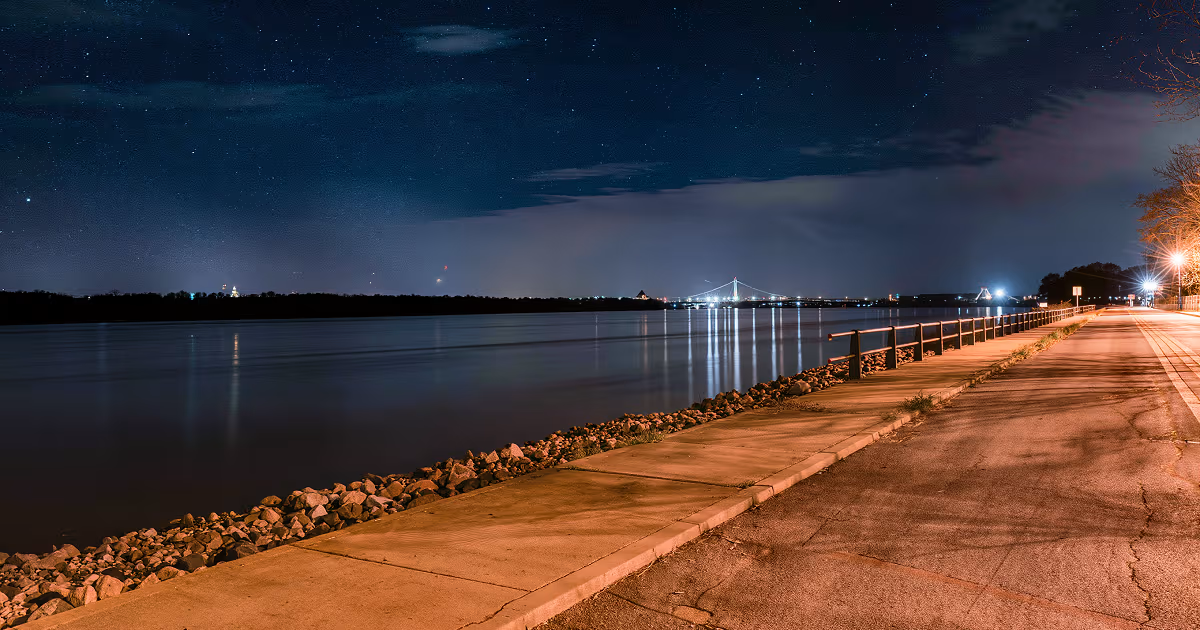
Loveland, Ohio, Little Miami. Approximate 39°16 N 084°18 W.
4. Official Narrative
Police reports exist for 1972. Official-adjacent close is a large escaped reptile. No specimen tagged Frogman.
5. Witness Layer
1955 salesman as later named. Officers Shockey and Matthews. Town memory.
Matthews later says he thinks he shot at a large iguana or a similar animal that did not belong on that asphalt.
Second sentences matter. They are allowed to be dull. They are also allowed to be late. File both of Matthews' nights: the thing on the road, then the animal that should not have been there.
Do not mash them into a breeding population.
Two sightings make a postcard. They do not make a species. Keep the river. Leave the colony in the gift shop.
6. Recovery Logistics
Police talk. No body. No hide.
7. Assessment
Start with 1972 and the roster. An officer on a road is a better card than a delayed salesman. Iguana is a cheap close that might be true. Frog-man is a town name that will outlive any close. Write the road first.
This folder files Loveland as a river-town card with a police night and a later animal sentence. Keep 1955 in a shorter paragraph. Do not give Ohio a breeding pair.
8. Materials & Remains
Logs as remembered. No specimen.
9. Key Personnel
Ray Shockey / Mark Matthews : 1972.
1955 salesman as later named : The earlier bank.
10. Aftermath
The town keeps the name. Festivals keep the face. The river keeps whatever walked out of it, if anything did.
11. Current Archive Status
Status: 1972 road. Frog name. No hide.
Confidence: High that Loveland police logged an odd animal in 1972. Low that a frog-man is typed. Low that 1955 and 1972 are one thing.
Filing note
An Ohio river town, a 1972 road, two officers, a face the postcard kept, a later sentence about an iguana that did not belong, a 1955 bank that should not be allowed to mint a species.
It would not stay to be measured. That is the only zoology this page trusts.